


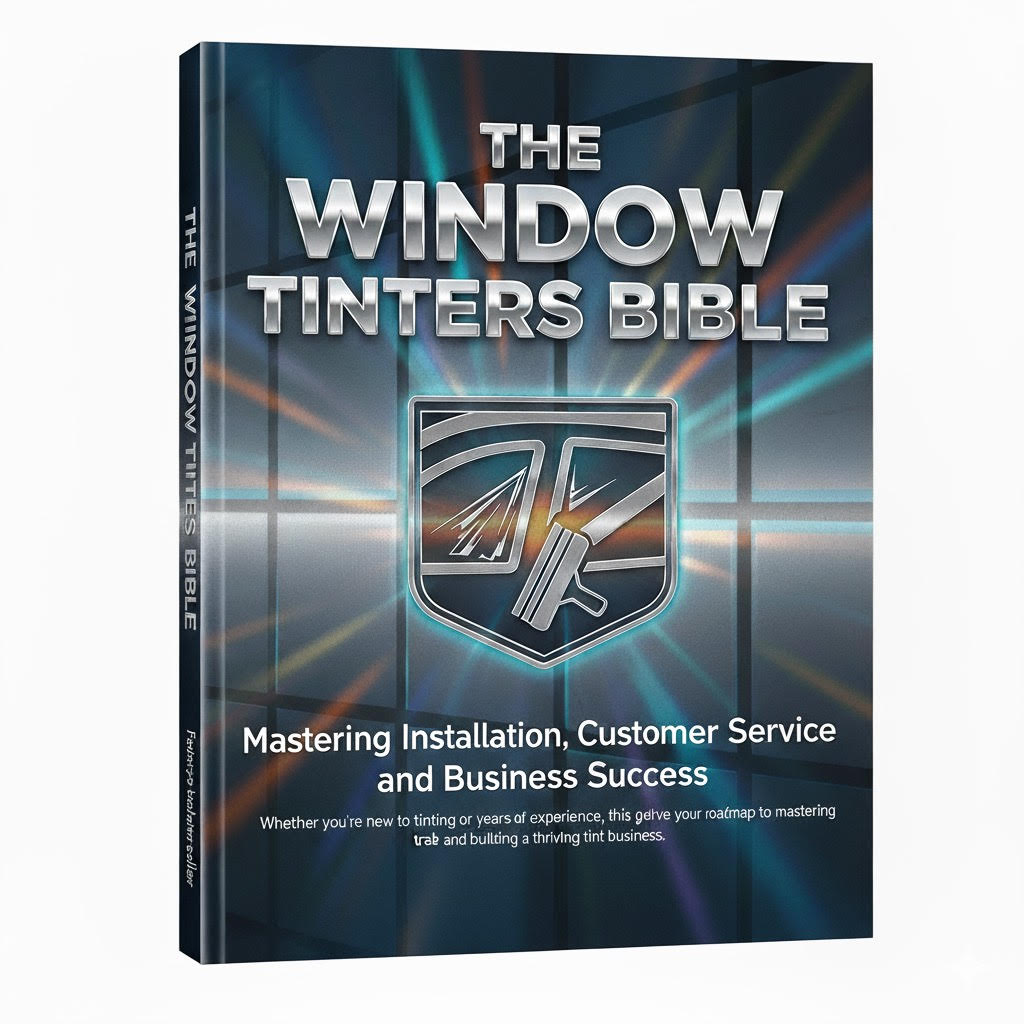
Big news for the automotive industry – The Tint Academy is about to release its very first book, and it’s going to be the ultimate guide for anyone looking to master the art of window tinting and paint protection film (PPF).
Whether you’re a complete beginner, a shop owner looking to train your staff, or a seasoned installer who wants to sharpen your skills, this book is designed to give you the knowledge, tools, and insider strategies to succeed.
What’s Inside the Book:
📖 Step-by-Step Training – From cutting and shrinking film to professional installation methods.
📖 Business & Marketing Tips – How to price jobs, attract new customers, and build a profitable tint or PPF business.
📖 Customer Management – The secrets to handling objections, creating long-term clients, and standing out in your market.
📖 Troubleshooting & Pro Tips – Avoid costly mistakes and learn shortcuts from the experts.
Why This Book Matters:
At The Tint Academy, we’ve trained thousands of students across Canada and the USA through hands-on courses. This book brings together years of experience, real-world techniques, and proven systems so you can learn at your own pace – anywhere, anytime.
Whether you dream of launching your own shop or simply want to pick up a high-demand trade, this book will become your go-to resource for success in the tint and PPF industry.


 The Bible of Window Tinting
Mastering Installation, Customer Service, and Business Success for every level of window film installer
To my beautiful baby girl - Ariella (AG)
Table of Contents
Part 1: The Foundation
- Introduction: Why Window Tinting is More Than Film on Glass
- Understanding Window Film: Types, Benefits, and Myths
-
- Dyed, Carbon, Ceramic, Nano
- Factory tint vs aftermarket
- Heat rejection, UV protection, privacy
Part 2: Mastering Installation
- The Tinting Workspace: Tools and Setup
-
- Squeegees, hard cards, tint brushes, heat guns, knives
- Cleanliness & dust control
- Film Preparation and Handling
-
- Cutting film, reverse rolls, shrinking techniques
- Using a plotter - should you invest in one? Pros and cons
- The Installation Process
-
- Two-stage method vs single piece
- Back window shrinking
- Side windows, quarters, windshields
- Frameless windows
- Common Problems and Fixes
-
- Bubbles, fingers, creases, dirt contamination
- Coating on windows - how to check
- Drying & Curing Explained
-
- How long tint takes to cure
- Seasonal drying times
- Customer education on post-install care
- 8. How to decide which brand of film to sell
Part 3: Protecting the Work
- Understanding Warranties
-
- Manufacturer vs installer warranties
- What’s covered and what’s not
- Handling warranty claims professionally
- Quality Control and Aftercare Instructions
-
- How to set customer expectations
- Delivering vehicles with professionalism
Part 4: The Business of Tinting
- How to Get Customers
- Social media (Instagram, TikTok, YouTube)
- Google Business Profile & SEO
- Referral programs and partnerships
- Dealerships, auto detailers, car clubs
- Handling Customers
- The psychology of selling tint
- Explaining film differences & upselling ceramic
- Managing objections and complaints
- Turning a one-time customer into repeat business
- Pricing & Profitability
- How to price jobs for profit
- Packages: Good, Better, Best strategy
- Value-based selling instead of discounting
Part 5: Scaling and Legacy
- Building a Tint Brand
- Logo, branding, uniforms, shop culture
- Online reviews & reputation management
- Hiring and Training Staff
- When to hire, how to train
- Maintaining quality with multiple installers
- Future of Window Tinting
- Trends: ceramic, spectrally selective, smart film
- Diversification: PPF, ceramic coating, auto glass
- Why you should diversify
Conclusion
From Installer to Industry Leader – mindset, persistence, and building a legacy.
Bonus - flat glass installation - rules, how to install and pricing
Bonus x 2 - the business of PPF and Coloured PPF
The Bible of Window Tinting
Mastering Installation, Customer Service, and Business Success
About the Author
Adam - founder and director of Tint Academy. The largest hands on window tint and PPF courses across Canada, USA and South East Asia. Adam has dedicated breaking down barriers and providing real life hands on education for all levels. He has personally taught (at the time of publication) 6,200 window tint and PPF Students. His goal was to set the standard in hands on window tint education.
Why we wrote this book:
Window tint and PPF installation has given me the life I never would have dreamed of and I want to give you the exact framework to be successful. In the Bible of Window Tinting - is the exact framework for you to be successful - whether you want to offer window tint on the side - or scale a shop - we have cultivated years of education, success, failures and more all into this book
Introduction: Why Window Tinting is More Than Film on Glass
Window tinting isn’t just a trade—it’s an art, a science, and a business. At its core, tinting is about more than sticking film onto glass. It’s about transforming vehicles, protecting people, and creating a customer experience that lasts long after the installation is finished.
Over the years, the tinting industry has grown from a niche service to a multi-billion-dollar market spanning automotive, residential, and commercial applications. What used to be considered a luxury is now seen as a necessity for heat rejection, UV protection, safety, and privacy. With advancements in film technology—such as ceramic and nano-ceramic films—the industry continues to evolve, offering installers endless opportunities to grow.
But success in window tinting doesn’t come from skills alone. A true tint professional must master:
- Technical Excellence: Clean installs, proper shrinking, zero contamination.
- Product Knowledge: Understanding film differences and confidently explaining them.
- Customer Service: Managing expectations, handling complaints, and creating loyalty.
- Business Savvy: Marketing, pricing, and scaling for profit.
This book will take you through all of it—the craft, the business, and the mindset of a successful tint professional. Whether you’re new to tinting or have years of experience, this guide will serve as your roadmap to mastering the trade and building a thriving tint business.
Chapter 1: Understanding Window Film – Types, Benefits, and Myths
Before learning how to install film or run a business, you need to understand the foundation of window tinting: the film itself.
1.1 Types of Window Film
1. Dyed Film
- Entry-level film, affordable but limited performance.
- Mainly for aesthetics and privacy.
- Tends to fade or turn purple over time.
2. Metalized Film
- Uses metallic particles for heat rejection.
- Reflective look, strong performance.
- Can interfere with radio, GPS, or cell signals.
3. Carbon Film
- Non-reflective, sleek finish.
- Good heat rejection without signal interference.
- More durable than dyed, mid-tier option.
4. Ceramic Film
- Premium option with advanced infrared heat rejection.
- Crystal-clear visibility, even at high tint levels.
- Scratch-resistant, long-lasting, no signal interference.
- Considered the gold standard in automotive and architectural tinting.
5. Nano-Ceramic Film
- Next-generation technology.
- Even greater infrared blocking and UV rejection.
- Often sold at the highest price point.
1.2 Benefits of Window Tint
- Heat Rejection – Reduces interior heat by up to 60% or more with ceramics.
- UV Protection – Blocks 99% of harmful UV rays, protecting skin and interiors.
- Privacy & Security – Keeps prying eyes out, adds shatter resistance to glass.
- Glare Reduction – Improves visibility, especially for drivers.
- Energy Savings – In homes and offices, tint reduces AC costs.
- Aesthetics – Enhances vehicle appearance, giving a sleek, uniform look.
1.3 Common Myths About Window Tint
- “Tint will always bubble.”
→ Incorrect. Bubbles are the result of poor installation or cheap film. A professional install with quality film should last years without bubbling. - “Tint is only for looks.”
→ Wrong. Modern tint provides real performance: heat rejection, UV protection, glare reduction, and safety benefits. - “Factory tint is the same as aftermarket tint.”
→ Not true. Factory tint is dyed glass, offering privacy only, not heat or UV protection. Aftermarket film is needed for performance.

Share and get 15% off!
Simply share this product on one of the following social networks and you will unlock 15% off!