


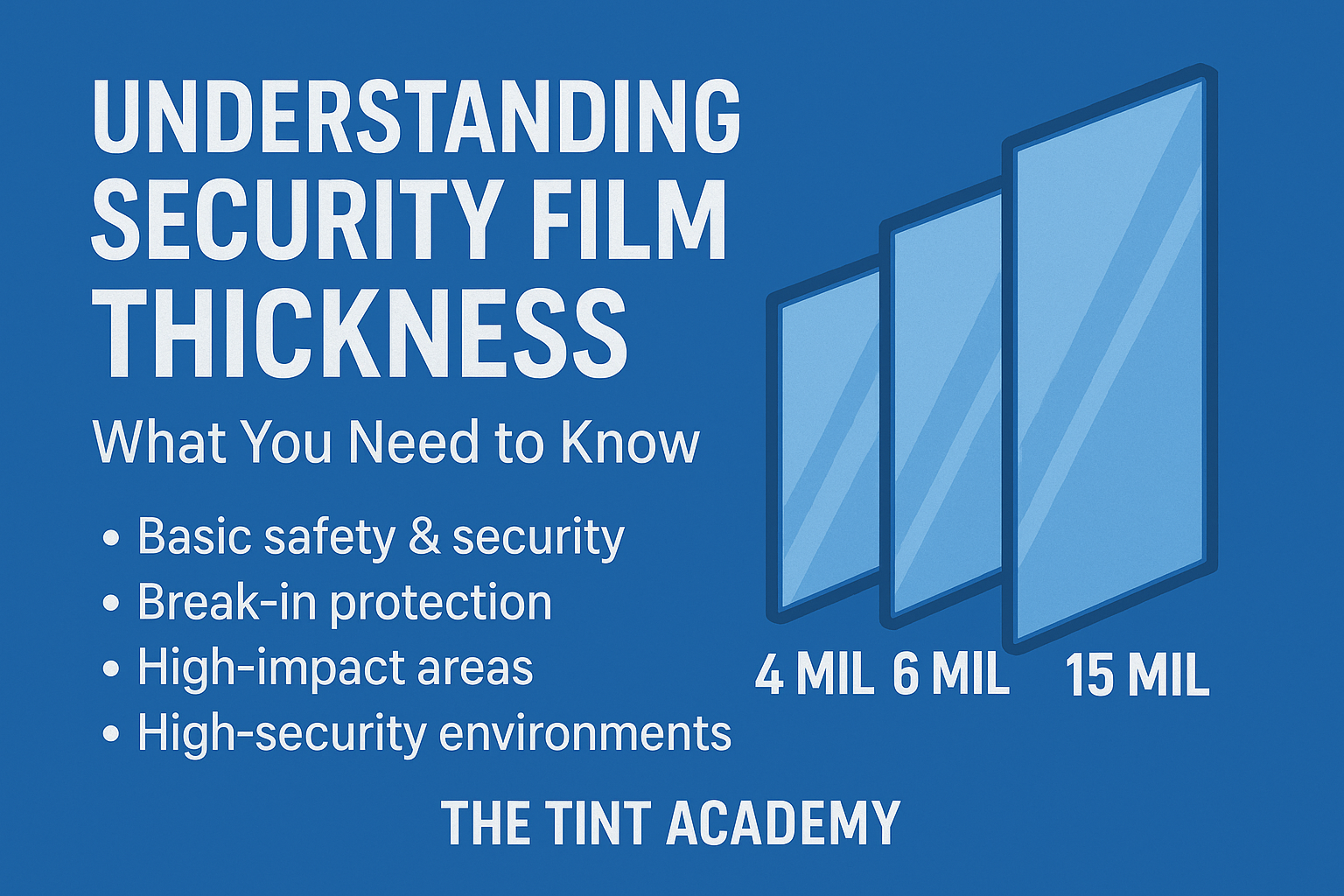
Security window film has become one of the most effective and affordable ways to strengthen glass, enhance safety, and protect buildings from break-ins, accidents, storms, and even blast events. But not all security films are the same—one of the most important factors in choosing the right solution is film thickness.
From 4 mil to 15 mil, each thickness serves a different purpose. In this guide, we break down the most common security film thicknesses, explain how they perform, and show where each is best used.
What Does “Mil” Mean in Security Film?
Before choosing a film, it’s essential to understand the term mil.
-
1 mil = 0.001 inches
-
Security films typically range from 4 mil to 15 mil
-
Thicker film = higher strength and impact resistance
While thicker films provide more protection, they also require proper installation technique and—often—anchoring systems such as wet glazing or mechanical anchors.
Security Film Thickness Breakdown
Below are the most common thicknesses used in residential, commercial, and high-security applications.
🌟 4 Mil Security Film (Entry-Level Protection)
What It Is:
A light-duty safety film primarily designed for basic glass strengthening.
Recommended Uses:
-
Interior offices
-
Low-risk residential windows
-
UV protection + minor safety upgrades
-
General accident prevention
Performance Level:
✔ Minimizes glass shattering
✔ Reduces risk of cuts/injuries
❌ Not ideal for forced-entry resistance
❌ Limited protection in storms or impacts
Best For:
Buildings where safety, not security, is the main concern.
🛡️ 6 Mil Security Film (Most Popular Thickness)
What It Is:
The industry standard for general security and moderate impact resistance.
Recommended Uses:
-
Homes seeking break-and-enter protection
-
Retail stores
-
Offices
-
Schools
-
Commercial buildings
Performance Level:
✔ Strong resistance to accidental impacts
✔ Basic forced-entry protection
✔ Works well with anchoring systems
✔ Effective for vandalism protection
Best For:
Most residential and commercial security needs.
🏢 8 Mil Security Film (Enhanced Forced-Entry Protection)
What It Is:
Stronger and more durable, designed for buildings with higher security concerns.
Recommended Uses:
-
Storefronts with valuable merchandise
-
Schools and universities
-
Government buildings
-
Street-level windows
-
Areas vulnerable to crime or attempted break-ins
Performance Level:
✔ Superior forced-entry resistance
✔ Longer delay time during break-ins
✔ Excellent for deterring smash-and-grab theft
✔ Performs better under structural flexing and impacts
Best For:
Locations needing enhanced security and delay time during forced entry.
🌀 10 Mil Security Film (Storm & High-Impact Protection)
What It Is:
A thicker, more robust film offering strong protection against heavy impacts and extreme conditions.
Recommended Uses:
-
Hurricane-prone regions
-
High-rise buildings
-
Industrial facilities
-
Municipal buildings
-
Large glass doors and storefronts
Performance Level:
✔ Increased impact resistance
✔ Excellent during natural disasters
✔ Often required for insurance or code compliance
✔ Best when paired with wet glazing anchoring
Best For:
Storm protection and heavy-duty commercial applications.
🚔 12 Mil Security Film (High-Security Applications)
What It Is:
A professional-grade film used for environments requiring very high levels of protection.
Recommended Uses:
-
Government and military facilities
-
Airports
-
Police stations
-
Jewelry stores
-
Cannabis dispensaries
-
Banks
Performance Level:
✔ Resists heavy impacts and multiple forced-entry attempts
✔ Common in anti-intrusion retrofits
✔ Performs well under blast or explosion pressures
✔ Requires professional installation and anchoring
Best For:
Facilities with critical security risks or high-value assets.
💥 15 Mil Security Film (Ultimate Protection)
What It Is:
The thickest commonly available security film—designed for extreme threat environments.
Recommended Uses:
-
Military-grade protection zones
-
High-threat government sites
-
Industrial facilities handling hazardous materials
-
VIP or executive protection environments
-
Blast-rated applications
Performance Level:
✔ Maximum forced-entry resistance
✔ Strong performance in blast mitigation
✔ Extremely difficult for intruders to bypass
✔ Always installed with a structural anchoring system
Best For:
Extreme protection scenarios where security and safety are mission-critical.
Choosing the Right Film: Quick Reference Guide
| Film Thickness | Primary Use | Risk Level |
|---|---|---|
| 4 Mil | Safety, anti-shatter | Low |
| 6 Mil | Standard security | Medium |
| 8 Mil | Enhanced forced-entry | Medium–High |
| 10 Mil | Storms & heavy impacts | High |
| 12 Mil | High-security commercial/government | Very High |
| 15 Mil | Blast mitigation & extreme threats | Critical |
Why Anchoring Matters (Regardless of Thickness)
While thicker films offer greater protection, their effectiveness dramatically increases when paired with:
-
Wet glazing
-
Mechanical anchors
-
Frame systems
Anchoring prevents the film and glass from being pushed through the frame—one of the biggest failure points during impacts or forced entry.
Final Thoughts
Understanding security film thickness is essential when planning protection for any building. Whether preventing injuries, stopping break-ins, or guarding against severe weather, the right film makes all the difference.
-
4–6 mil → Basic safety and general security
-
8–10 mil → Strong protection for commercial and vulnerable areas
-
12–15 mil → Heavy-duty and high-security environments
If you’re a student, installer, or business owner looking to sharpen your skills, The Tint Academy offers hands-on training for safety film installation, anchoring systems, and advanced security upgrades.

Share and get 15% off!
Simply share this product on one of the following social networks and you will unlock 15% off!