


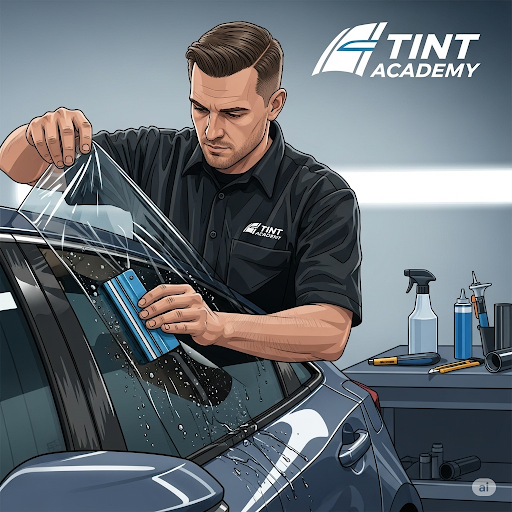
1. It's a blend of art and science.
While many people see window tinting as a simple installation job, it's a highly technical craft. Tinters need to have a keen eye for detail, the patience to work with delicate film, and the hand-eye coordination of an artist. It involves understanding different film types—from dyed and metalized to ceramic—and knowing how they react to heat, moisture, and various tools. Precision is paramount, as a single speck of dust or a misplaced cut can ruin an entire installation.
2. A tinter's job goes beyond cars.
The skills learned for automotive tinting are highly transferable. Professional tinters often expand their services to include residential and commercial flat-glass tinting, applying film to homes and office buildings. This means a tinter’s work can help homeowners save on energy bills and improve privacy, or assist businesses in enhancing security and aesthetics. The demand for these services is growing, offering multiple career paths within the industry.
3. Communication and customer service are as important as technical skill.
Being a successful tinter isn't just about a flawless installation. It's also about building relationships and effectively communicating with clients. Tinters need to consult with customers to understand their needs, whether it's for privacy, UV protection, or heat reduction. They must also be able to explain the benefits of different films and provide aftercare instructions, ensuring customer satisfaction and repeat business.
4. The history of window tinting is surprisingly long and full of innovation.
Window tinting is not a new technology. Early forms of "tinting" existed as far back as World War II, but the first window tinting film for cars was introduced in 1966. However, it was a dye-based film that would turn purple and bubble over time—a far cry from the durable, high-performance films used today. The industry has since evolved to create advanced films with metallic and ceramic particles that block heat and UV rays without interfering with electronic signals, such as GPS and cell phones.

Share and get 15% off!
Simply share this product on one of the following social networks and you will unlock 15% off!