


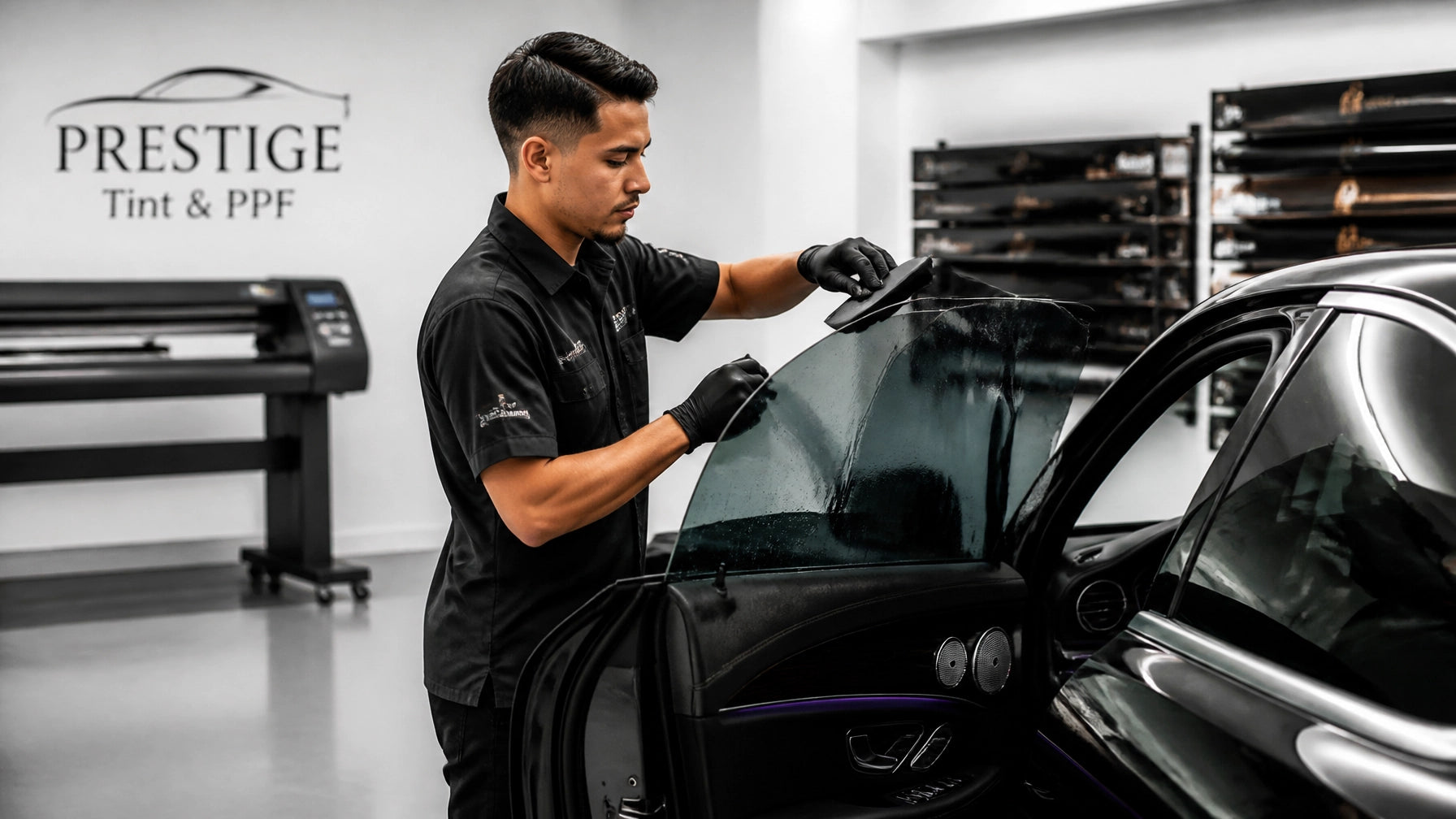
For most automotive dealerships, the prospect of bringing window tint and Paint Protection Film (PPF) in-house is a "no-brainer." On paper, the ROI is massive. Instead of shipping cars across town to a third-party shop: losing time, burning gas, and handing over 50% of your margin: you keep the profit, control the schedule, and ensure the quality meets your brand standards.
In fact, many of our partner dealerships see a revenue increase of $35,000 to $50,000+ per month after successfully integrating these services.
However, the transition from outsourcing to a high-volume, production-ready in-house department is rarely seamless. Many dealer groups stumble during the launch phase, leading to frustrated service managers, unhappy customers, and costly re-dos.
If your in-house program isn’t hitting its profit targets, or if you’re hesitant to pull the trigger on a launch, you’re likely making one of these seven common mistakes. Here is how to identify them and, more importantly, how to fix them.
1. The Outsourcing Addiction: Sacrificing Margin for "Convenience"
The biggest mistake isn't an installation error; it's a financial one. Many dealerships continue to outsource because it feels "easier." But when you look at the numbers, outsourcing is the most expensive way to run a business.
When you outsource, you aren't just paying for film and labor; you're paying for another business's rent, marketing, and profit margin. You also lose control over your inventory. If a customer wants their windows tinted before delivery at 4:00 PM, and your outside vendor is backed up, you risk a "deal-killer" delay.
The Fix: Transition to a full dealership in-house window tinting model. By bringing the skill set directly to your service bay, you reclaim that 50-60% margin and gain total control over your delivery timelines.
2. The "DIY" Training Trap: Relying on YouTube or "Quick Demos"
Window tinting is a craft that requires precision, heat management, and specialized chemical knowledge. A common mistake is assigning a detailer or a porter to "figure it out" via YouTube or a one-hour demo from a film rep.
This leads to "fingers" (peeling edges), light gaps, and trapped dust. Worse, untrained staff can easily damage a customer's vehicle: think cut defroster lines or water damage to sensitive door electronics.

The Fix: Invest in professional window tint training. At Tint Academy, we don't just show you how to peel a liner; we provide on-site training using your own vehicles and workflows. Our automotive window tinting certification ensures your staff is production-ready from day one, reducing the learning curve from months to days.
3. Ignoring the Environment: The "Dusty Bay" Problem
You can have the best tinter in the world, but if they are working in a dusty bay next to a technician using an air compressor or a detailer buffing a car, the job will fail. Dust and debris are the enemies of film. Even a single speck of lint can create a permanent bubble that ruins a premium delivery.
The Fix: Create a designated "Clean Zone" for film installation. This doesn't require a multi-million dollar clean room, but it does require a controlled environment with proper lighting, floor drainage, and minimal air movement. During our on-site training, we help dealerships audit their physical space to ensure it’s optimized for high-quality installs.
4. Choosing "Value" Films Over Performance
It’s tempting to buy the cheapest bulk rolls of film to maximize profit per car. However, low-quality dyed films are notorious for fading, turning purple, or delaminating within a year. In the dealership world, where CSI (Customer Service Index) scores are everything, a "purple tint" comeback two years later is a reputation killer.

The Fix: Use professional-grade materials like Scorpion Films. High-performance ceramic films offer superior heat rejection and color stability. Not only does this reduce warranty claims, but it also allows your F&I department to sell a premium product at a higher price point. Remember, the cost of film is a fraction of the total job; the real cost is the labor for a re-do.
5. Manual Cutting in a High-Volume Environment
If your installers are still "hand-cutting" film on the outside of the glass, you are losing money. Manual cutting is slow, prone to human error, and carries the risk of scratching the glass or cutting window moldings. For a dealership looking to process 5-10 cars a day, manual cutting is a bottleneck.
The Fix: Implement a digital plotter and software system. As part of our training packages, Tint Academy provides a complete PPF and tint setup, including a high-end plotter and software from Scorpion Films. This allows your team to cut precision patterns in seconds, ensuring a perfect fit every time and virtually eliminating material waste.
6. Missing the Massive PPF Opportunity
Many dealerships stop at window tinting, leaving the most profitable accessory on the table: Paint Protection Film (PPF). With modern vehicle prices soaring, customers are more protective of their investment than ever. PPF for "wear and tear" areas (hood, fenders, mirrors, and door cups) is a high-margin upsell that can double the profit of a single deal.

The Fix: Don't just stop at tint. Enroll your team in a comprehensive paint protection film training or a specialized PPF installation course. Learning how to properly stretch and tack PPF is a different skill set than tinting, but it is one that pays dividends in the luxury and SUV markets.
7. Weak Quality Control and Aftercare Instructions
The final mistake happens after the squeegee is put down. If the vehicle is delivered to the customer without a final inspection or proper aftercare instructions, you’re asking for a phone call 48 hours later. Customers often mistake "moisture bubbles" (a natural part of the drying process) for defects, or they roll down their windows too early, causing the film to peel.
The Fix: Standardize your hand-off process.
- The 24-Hour Rule: Ensure a second set of eyes inspects every window before the car hits the lot.
- Education: Provide a branded aftercare card explaining the 3-5 day drying period and the "do not roll down" window warning.
- Certification: Having an automotive window tinting certification gives your customers confidence that the work was done to a professional standard, not just "thrown on" in the back.

The Tint Academy Advantage: Bringing the Experts to You
Setting up an in-house tint and PPF department is a transformative move for any dealership's bottom line, but it shouldn't be a gamble.
At Tint Academy, we specialize in professional, on-site dealership training across Canada and the USA. We don't just teach you how to install film; we teach you how to run a production-ready department. Our packages include:
- On-Site Instruction: We come to your facility and train your staff on your vehicles.
- Full Equipment Setup: We provide the Scorpion Films plotter, software, and all necessary tools at no extra cost.
- ROI-Focused Curriculum: Our processes are designed for volume and efficiency, helping you hit that $35K-$50K monthly revenue goal.
Stop outsourcing your profits and start building a standardized, high-quality in-house department that pays for itself in the first month.
Ready to boost your dealership's ROI? Contact Tint Academy today to schedule your on-site training and get your team certified.

Share and get 15% off!
Simply share this product on one of the following social networks and you will unlock 15% off!