


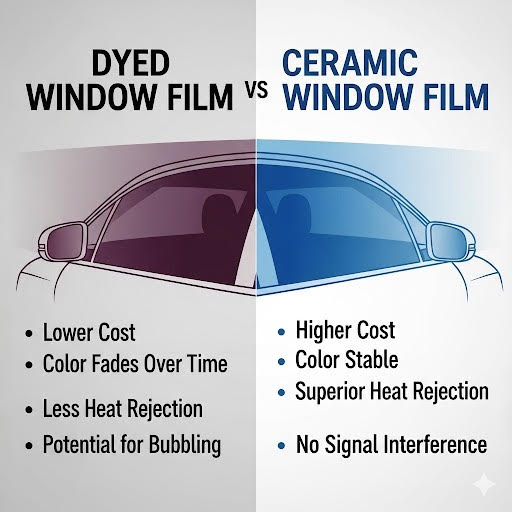
When it comes to choosing the right window tint, not all films are created equal. Two of the most common options customers hear about are dyed film and ceramic film. While both provide the sleek, tinted look drivers want, the differences in performance, durability, and value are significant. At Tint Academy, we teach our students to understand these differences so they can educate their clients and deliver the best results.
What is Dyed Film?
Dyed window film is the most basic and budget-friendly option on the market. It gets its shade from a layer of dye placed between the adhesive and protective layers.
✅ Pros of Dyed Film:
-
Affordable upfront cost
-
Reduces glare and improves aesthetics
-
Provides privacy
❌ Cons of Dyed Film:
-
Limited heat rejection (doesn’t block infrared rays effectively)
-
Can fade or turn purple over time
-
Less durable compared to advanced films
Dyed film is often chosen for drivers who want the tinted look and some sun glare reduction but aren’t as concerned with long-term performance or maximum heat rejection.
What is Ceramic Film?
Ceramic film is the premium option in the tinting industry. Instead of dye, it uses ceramic nanoparticles that are non-metallic and non-conductive. This technology makes ceramic film the gold standard for performance.
✅ Pros of Ceramic Film:
-
Excellent heat rejection (blocks infrared radiation that causes heat buildup)
-
Superior UV protection (protects passengers and interiors from sun damage)
-
Does not fade or discolor over time
-
Maintains clear visibility, even at night
-
Improves comfort and energy efficiency
❌ Cons of Ceramic Film:
-
Higher upfront cost compared to dyed film
Ceramic film is best for customers looking for long-term value, comfort, and protection, making it especially popular in hot climates or with luxury vehicles.
Dyed vs. Ceramic: Which Should You Choose?

-
If your client’s main priority is budget and style, dyed film may be the way to go.
-
If they want performance, heat rejection, and durability, ceramic film is the smarter investment.
At Tint Academy, we emphasize educating customers about these differences. When clients understand why ceramic film performs better, they often see the value in investing in quality rather than just going with the cheapest option.
Final Thoughts
Both dyed and ceramic window films have their place in the tinting industry. As an installer or shop owner, your role is to guide customers toward the option that best fits their needs, lifestyle, and budget. Mastering how to explain these differences not only builds trust but also positions you as a knowledgeable professional in your market.

Share and get 15% off!
Simply share this product on one of the following social networks and you will unlock 15% off!