


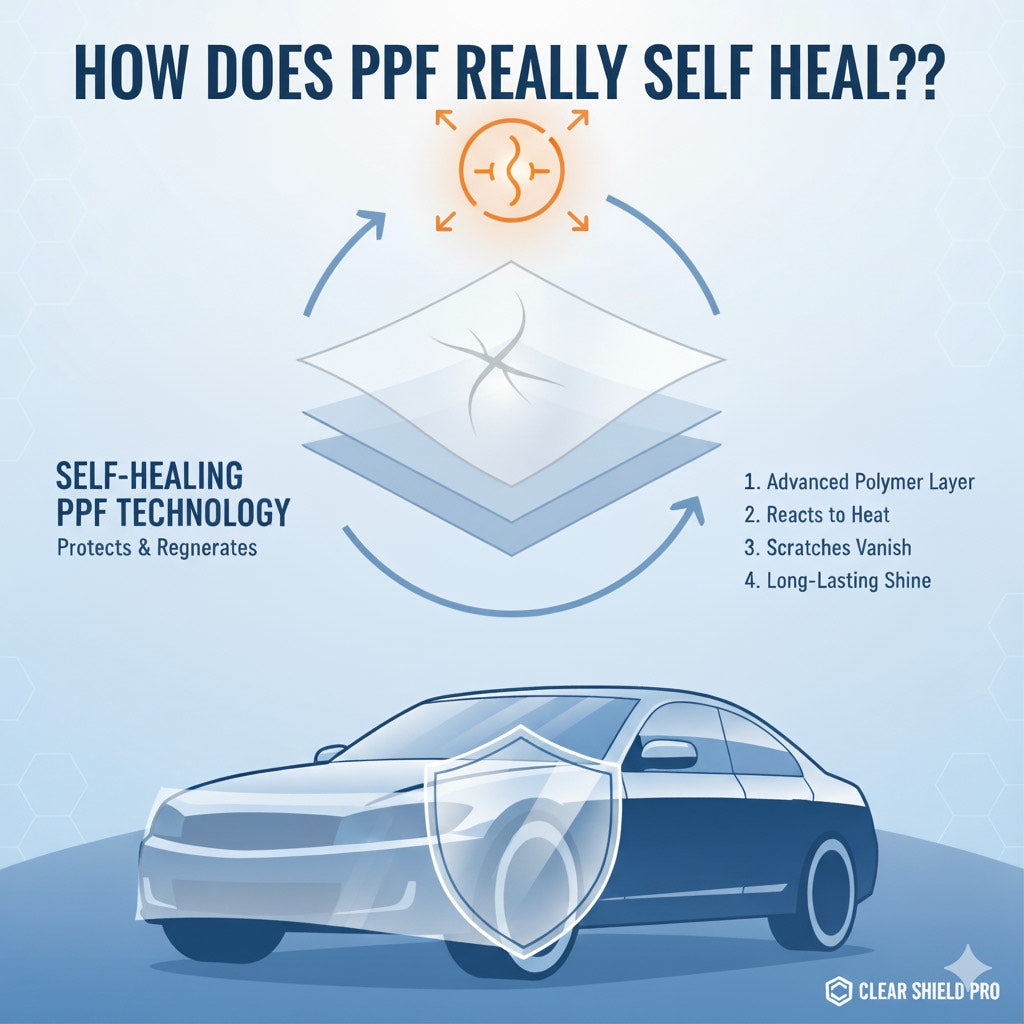
When it comes to protecting vehicle paint, paint protection film (PPF) has changed the game. But what really sets modern PPF apart is its self-healing technology — a feature that helps eliminate light scratches, swirls, and blemishes almost like magic.
Ready to learn PPF? Click here
If you’ve ever noticed how some vehicles seem to keep that flawless, just-detailed look no matter how often they’re washed or driven… chances are they’re protected with self-healing PPF.
Self-healing PPF is a durable, transparent urethane film applied to a vehicle’s painted surfaces. Unlike traditional clear bras, these films are designed with advanced top-coat technology that can “heal” fine surface damage.
Common minor imperfections that self-healing film can fix include:
-
Swirl marks from washing or drying
-
Light scratches from road debris
-
Scuffs caused by brushes, clothing, or wiping
The best part? No expensive repairs or polishing are required to fix these — the film does the work itself.
How the Self-Healing Process Works
The key to self-healing is found in the elastomeric top layer of the film. This top coat has “memory” — it wants to return to its original, smooth state. When scratched, the surface temporarily deforms. Add a little heat (from the sun, hot water, or a heat gun), and the film reverts back to its original shape, making the scratch disappear.
How Self-Healing Actually Works
When a light scratch or swirl occurs, only the top coat is disturbed — not the paint underneath.
Here’s the process at the molecular level:
-
Scratch occurs → The polymer chains in the top layer deform.
-
Heat is applied (sunlight, warm water, or a heat gun).
-
The polymer’s molecular mobility increases — chains begin to move and relax.
-
The material “flows” back into its original structure, closing the scratch.
-
The surface becomes smooth again.
This is known in polymer science as “thermally induced shape recovery.”
Heat Sources That Trigger Healing
You don’t need fancy tools to make self-healing happen. Everyday conditions are usually enough:
-
☀️ Sunlight naturally warms the surface and heals minor marks.
-
💧 Warm water during a wash can help blemishes fade away.
-
🔥 Heat guns or warm garages speed up the healing process for deeper imperfections.
Benefits of Self-Healing PPF
-
✅ Scratch and swirl resistance — reduces the need for polishing.
-
🧼 Easy maintenance — less detailing over time.
-
🚘 Preserves resale value — your paint stays like-new.
-
💪 Durable protection — shields against chips, stains, and weathering.
Self-healing PPF is especially popular among performance car owners, EV drivers, and anyone who wants their vehicle to stay looking sharp without constant upkeep.
Final Thoughts: Invisible Protection That Lasts
Self-healing paint protection film is more than just a layer of defense — it’s a smart technology that maintains your vehicle’s finish automatically. By combining impact resistance with self-repairing properties, it’s one of the most effective ways to protect your investment long-term.
Whether you drive a daily commuter, a luxury sedan, or a show car, self-healing PPF gives you the confidence to enjoy your vehicle without worrying about every scratch.

Share and get 15% off!
Simply share this product on one of the following social networks and you will unlock 15% off!