


If you’re running a tint or PPF shop, you already know that high-quality film is one of your biggest investments. But what many installers don’t realize is just how sensitive tint film really is.
Store it incorrectly—even for a short period—and you can ruin an entire roll.
That means wasted money, failed installs, and unhappy customers.
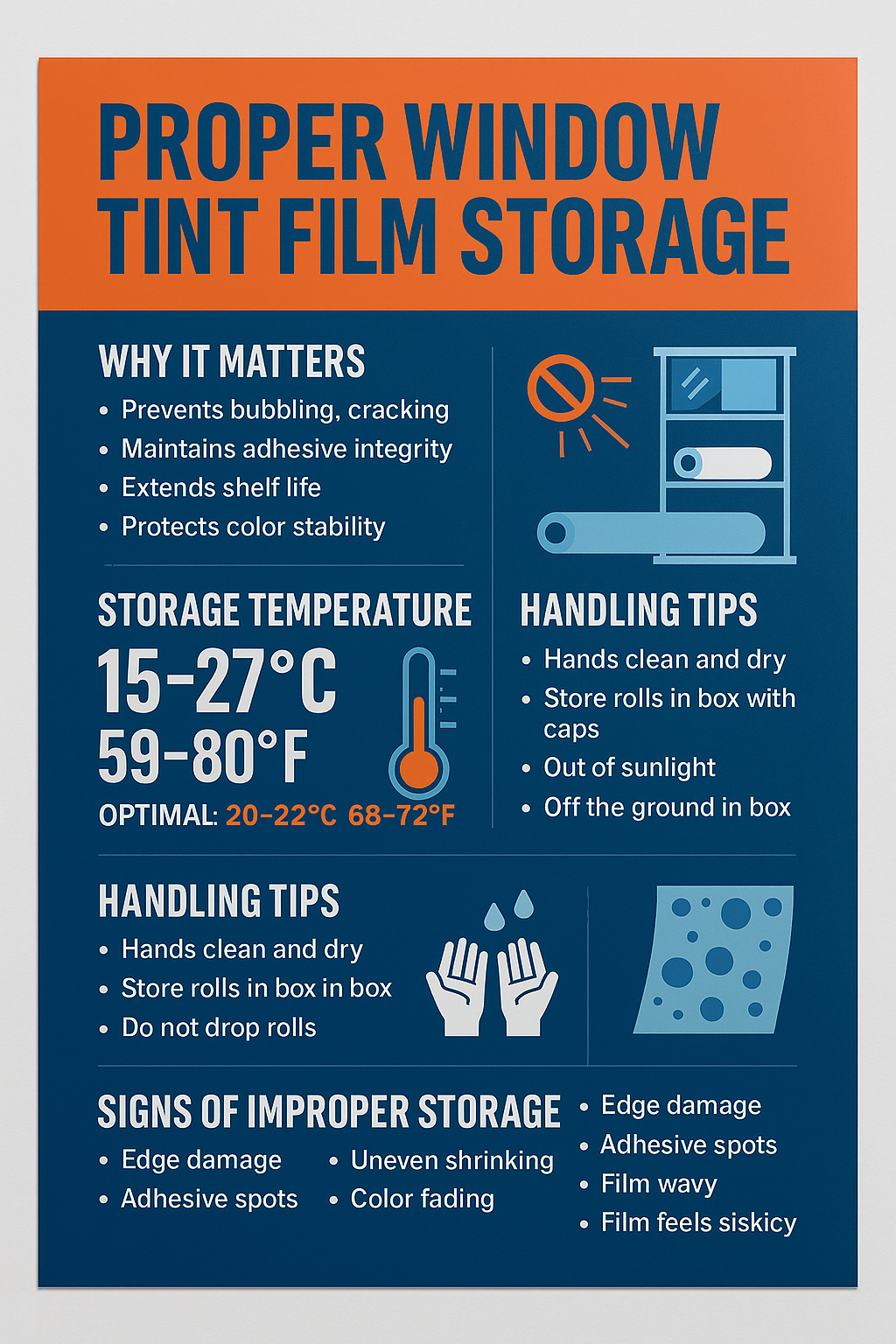
To help you protect your inventory and maintain perfect film performance, we created this guide (and matching shop wall poster) on proper window tint film storage.
Why Proper Film Storage Matters
Window tint film is made of multiple layers: PET polyester, adhesive, dyes, carbon particles, ceramic coatings, and scratch-resistant layers.
These materials are sensitive to:
-
Temperature
-
Humidity
-
UV exposure
-
Pressure
-
Dirt and dust
When film is stored improperly, several issues can appear:
✓ Bubbling or peeling
Adhesives soften or harden from extreme temperature fluctuations.
✓ Cracking or creasing
Cold storage makes film brittle.
✓ Color fading or distortion
UV exposure breaks down dye and carbon layers.
✓ Uneven shrinking
Improper roll pressure or heat creates warped film.
✓ Adhesive damage
Humidity or heat ruins glue and bonding layers.
Simply put—proper storage protects your film, your work, and your reputation.
Recommended Storage Temperature
To keep film safe and stable, tint manufacturers recommend storing film at:
🔹 15–27°C (59–80°F)
🔹 Optimal range: 20–22°C (68–72°F)
Temperatures outside this range can cause:
-
Too cold: adhesive stiffens, film cracks, edges wrinkle
-
Too hot: adhesive melts, film buckles, rolls fuse together
If you’re in a cold climate (Canada, northern U.S.), never store film in an unheated garage.
If you’re in a hot climate (Texas, Florida, Arizona), avoid storing film in attics or metal buildings.
Essential Handling Tips
Even when you store film properly, how you handle it day-to-day matters just as much.
1. Keep your hands clean and dry
Oil, dirt, and moisture ruin adhesive layers.
2. Always store film in the original box
The box protects film from:
-
Dust
-
Light
-
Pressure
-
Contamination
3. Use end caps or roll plugs
These prevent the roll from collapsing or becoming egg-shaped.
4. Keep film off the ground
Moisture and dust collect near floors.
5. Never drop a film roll
A single drop can warp the core or create permanent wrinkles.
6. Store away from chemicals
Film absorbs odors and vapors from:
-
Gas
-
Thinners
-
Solvents
-
Harsh cleaners
Keep these separate.
Signs Your Film Was Stored Incorrectly
If you see any of the symptoms below, don’t install the film—you’ll only create problems for yourself and your customer.
🚩 Edge damage
Wrinkled, wavy, or crushed edges that cause contour problems during shrinking.
🚩 Adhesive spots
Uneven adhesive means the film was exposed to heat.
🚩 Uneven shrinking
Film appears “tighter” in some areas than others.
🚩 Color fading
Especially common with dyed films exposed to sunlight.
🚩 Sticky or rubbery texture
Indicates humidity or heat exposure.
If you find any of these signs, cut off the first 18–24 inches of the roll or discontinue using it.
Why We Made the Wall Poster
To help installers maintain consistent film quality, we designed a visual wall poster you can print and hang directly in your shop.
It helps:
-
New installers learn best practices
-
Shops maintain consistent standards
-
Prevent expensive film waste
-
Strengthen shop professionalism
If you don’t already have it, you can download the poster below:

Final Thoughts
Film storage is one of the simplest—but most overlooked—parts of running a professional tint or PPF business. By keeping film at the right temperature, avoiding contamination, and following basic handling rules, you protect your inventory, your installs, and your reputation as a top-tier installer.
Taking care of your tint film before it reaches the car ensures smoother shrinking, cleaner installs, and happier customers.

Share and get 15% off!
Simply share this product on one of the following social networks and you will unlock 15% off!