


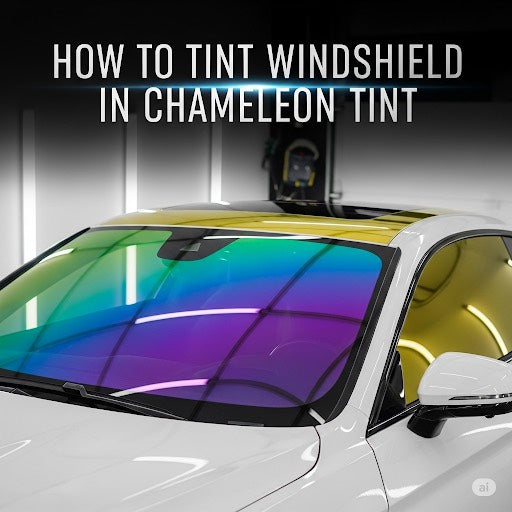
Chameleon windshield tint has quickly become one of the hottest trends in automotive styling. Known for its shifting colors, sleek finish, and UV/heat rejection properties, chameleon tint transforms your car’s appearance while offering practical benefits. But tinting a windshield—especially with chameleon film—requires extra precision, proper tools, and a careful approach.
In this blog, we’ll walk through how you can tint a windshield in chameleon film, from preparation to installation, so you can get that bold, eye-catching look done right.
Why Chameleon Tint?
Chameleon tint is different from traditional window films because it changes color depending on the lighting and viewing angle. Besides the aesthetic factor, high-quality chameleon films offer:
-
UV Protection: Blocks harmful UV rays that can damage skin and interiors.
-
Heat Rejection: Keeps your car cooler in the summer.
-
Reduced Glare: Improves visibility during daytime driving.
-
Unique Style: The color shift sets your vehicle apart from the rest.
Tools and Materials You’ll Need
Before starting, make sure you have the right tools on hand:
-
Chameleon windshield film (pre-cut or bulk roll)
-
Heat gun
-
Spray bottle with slip solution (distilled water + baby shampoo)
-
Hard card or squeegee
-
Microfiber towels
-
Glass cleaner & razor blade scraper
-
Precision knife (e.g., Olfa)
Step 1: Prepare the Windshield
A clean, contaminant-free surface is the key to a flawless tint.
-
Clean thoroughly: Use a razor blade scraper to remove any dirt, stickers, or residue.
-
Wipe down: Spray glass cleaner and wipe with a microfiber towel until spotless.
-
Final rinse: Use your slip solution to keep the glass lubricated for heat shrinking.
Step 2: Heat Shrink the Film (Dry Shrink Method)
Since windshields are curved, the chameleon film needs to be heat-shaped before installation.
-
Place the film: Lay the chameleon film on the outside of the windshield with the liner facing you.
-
Anchor the center: Squeegee a vertical line down the middle to hold the film in place.
-
Heat and shrink: Using a heat gun, move in controlled motions from the center out to the edges, smoothing out fingers as you go.
-
Trim to fit: Cut the excess film, leaving a small overhang for adjustments.
Step 3: Install the Film on the Inside
Now comes the actual application inside the vehicle.
-
Peel the liner: Spray the adhesive side with slip solution as you peel to prevent dust sticking.
-
Wet the inside glass: Spray a generous layer of slip solution on the inside of the windshield.
-
Position the film: Carefully place the film adhesive side down, aligning it with the top edge first.
-
Squeegee from center out: Use firm, smooth strokes to push water and air bubbles toward the edges.
Step 4: Final Touches
-
Check for bubbles: If you see small bubbles, work them out with a hard card and heat.
-
Dry edges: Use a microfiber towel to soak up any excess moisture along the edges.
-
Cure time: Let the film cure for 24–48 hours before cleaning or rolling windows (if applicable).
Pro Tips for Chameleon Windshield Tinting
-
Always check local laws—some regions have strict rules about windshield tint shades and VLT (Visible Light Transmission) levels.
-
Use high-quality chameleon film—cheap film may fade, bubble, or peel prematurely.
-
Work in a dust-free environment to avoid contamination.
Conclusion
Tinting a windshield with chameleon film is a mix of art and precision. When done right, it delivers a jaw-dropping look that turns heads on the road while keeping your cabin cooler and more comfortable. Whether you’re a DIY enthusiast or a professional installer, following the right steps ensures a clean, professional finish.
If you want to learn more advanced installation techniques—like bottom loading or PPF application—consider training with The Tint Academy, where we offer hands-on courses to sharpen your skills.

Share and get 15% off!
Simply share this product on one of the following social networks and you will unlock 15% off!