


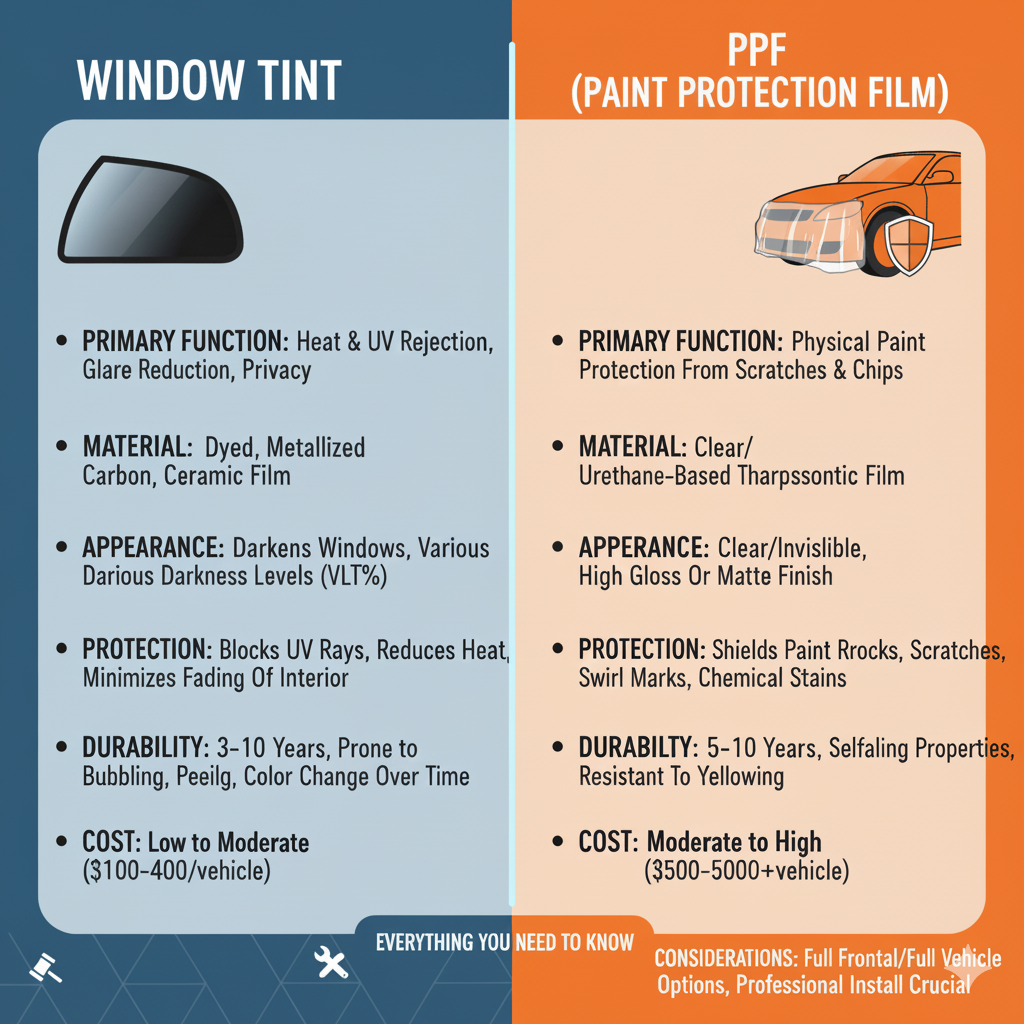
If you’re considering a career in automotive services or looking to expand your skills, you’ve probably wondered: Should I focus on window tinting or paint protection film (PPF)? Both are in-demand skills, but they differ in learning curve, profitability, and market potential. In this blog, we’ll break it all down so you can make the right choice—and even show how to combine both for maximum success.
What is Window Tinting?
Window tinting is the art of applying a thin film to a car’s windows to reduce heat, glare, and UV exposure while enhancing privacy and style.
Key Points:
-
Quick installations: Most cars can be tinted in 1–3 hours.
-
Materials: Dyed, metalized, or ceramic films.
-
Skill focus: Precision, edge work, and squeegee techniques.
Pros of Tinting:
-
Fast learning curve.
-
High demand year-round.
-
Low startup costs ($500–$1,500).
Cons of Tinting:
-
Lower profit per vehicle ($150–$400).
-
Less prestigious compared to PPF in luxury markets.
What is Paint Protection Film (PPF)?
PPF is a clear urethane film applied to a car’s exterior to protect paint from scratches, chips, and environmental damage.
Key Points:
-
Installations take 6–20 hours depending on coverage.
-
Requires advanced training and precision.
-
High-end clients are common: luxury, exotic, or fleet vehicles.
Pros of PPF:
-
Higher profit per install ($800–$3,500).
-
Less competition; specialized market.
-
Can be bundled with other services like detailing or wraps.
Cons of PPF:
-
Steep learning curve.
-
Higher material and equipment costs ($1,000–$2,500+ per full kit).
-
Longer jobs can limit volume if you don’t scale.
Profit Comparison: Tint vs PPF
| Service | Avg Install Time | Avg Material Cost | Avg Price Charged | Profit Potential |
|---|---|---|---|---|
| Window Tint | 1–3 hours | $50–$150 | $150–$400 | $100–$300 per car |
| PPF (Partial) | 6–8 hours | $300–$500 | $800–$1,200 | $500–$700 per car |
| PPF (Full Car) | 12–20 hours | $1,000–$2,500 | $2,000–$3,500+ | $1,000–$2,000+ per car |
Insight: PPF offers significantly higher profits per car, but tinting allows faster turnover and cash flow.
Skill Demand & Market Trends
-
Window Tinting: Evergreen skill, perfect for mass-market clients. Ceramic tinting is increasingly popular.
-
PPF: Growing rapidly in the luxury and fleet market. Certified PPF installers can charge premium rates.
Future Outlook: PPF is the premium automotive protection skill, while tinting remains a reliable income stream.
Which Skill Should You Choose?
-
Window Tinting is ideal if:
-
You want a faster start and lower costs.
-
You plan to serve mid-range clients.
-
You want a skill you can learn quickly and start earning from immediately.
-
-
PPF is ideal if:
-
You want high-ticket jobs and long-term profitability.
-
You’re willing to invest in training and tools.
-
You aim to work with luxury or exotic vehicles.
-
Pro Tip: Many successful installers do both—start with tinting for cash flow, then expand into PPF for high-ticket clients.
How to Learn Window Tinting & PPF
-
Professional Training: Courses like The Tint Academy provide hands-on, certified programs.
-
Online Tutorials & Practice: Good for basics but limited for advanced PPF.
-
Apprenticeship: Learn from certified installers for real-world experience.
Recommended Path:
-
Start with window tinting to build skills and confidence.
-
Practice on friends or personal vehicles.
-
Take a certified PPF course to scale into premium installations.
Bottom Line
-
Window Tinting: Fast, affordable, steady demand, perfect for beginners.
-
PPF: High profit, niche market, requires precision and investment.
-
Best Strategy: Combine both. Learn tinting first, then add PPF to your skill set for maximum earnings and market versatility.
If you’re serious about growing your automotive services career, mastering both skills can make you a highly sought-after installer—able to serve all levels of clients, from everyday drivers to luxury car owners.

Share and get 15% off!
Simply share this product on one of the following social networks and you will unlock 15% off!