


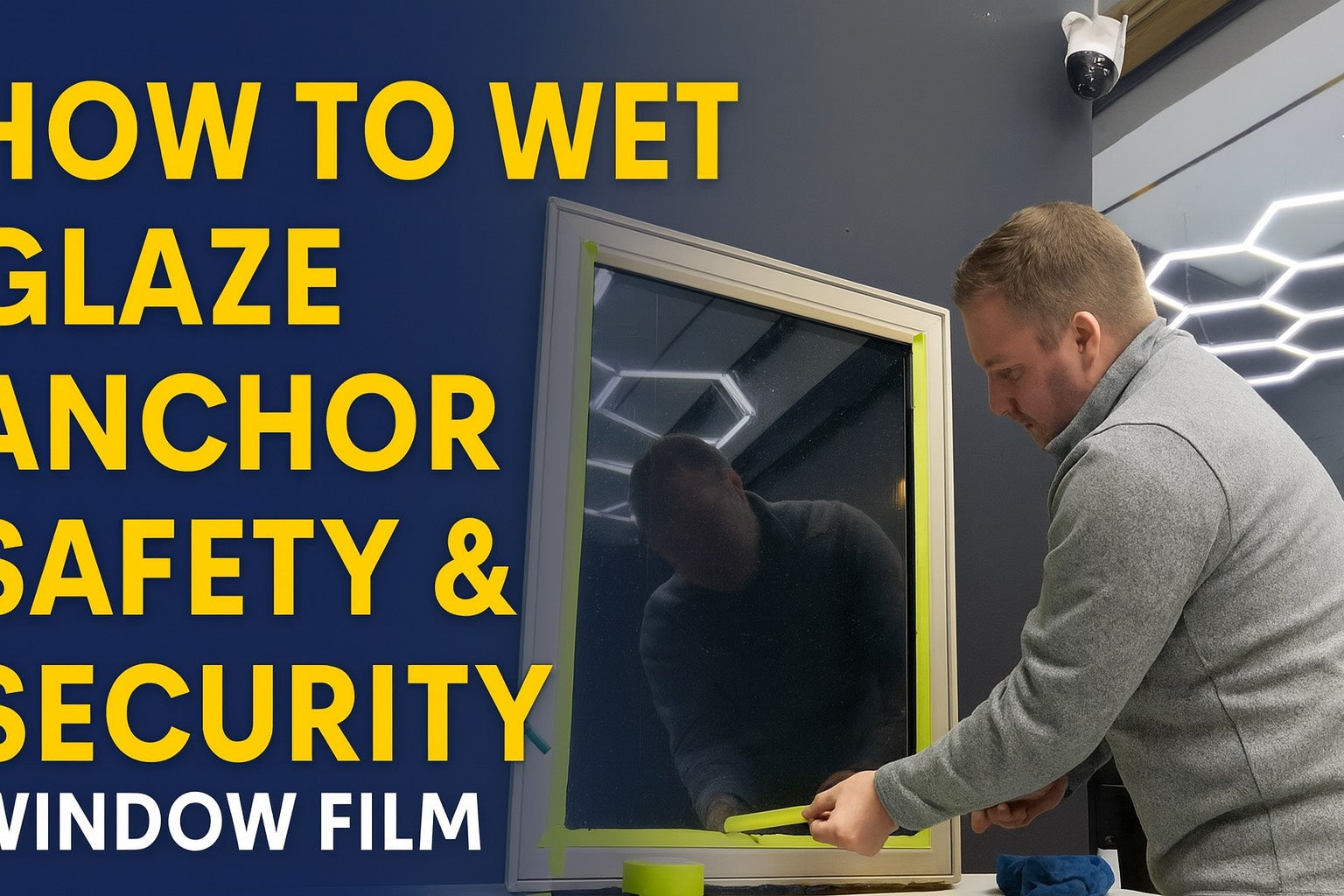
When installing safety and security window film, the job isn’t always finished once the film is applied. For many high-security applications—such as schools, storefronts, government buildings, and commercial facilities—a wet glaze anchoring system is recommended to strengthen the installation and dramatically improve impact resistance.
Wet glazing is more than just applying a bead of sealant. It is a structural enhancement that bonds the film to the window frame, reducing the risk of the glass and film being pushed through the frame during forced entry, accidents, or blast events.
In this guide, we break down what wet glazing is, why it matters, and how to perform it properly after installing safety and security film.
What Is Wet Glazing for Safety & Security Film?
Wet glazing is the process of applying a structural silicone sealant around the perimeter of a window after security film installation.
Its purpose is to create a strong bond between:
-
The installed safety/security film
-
The glass surface
-
The window frame
This bond acts like an anchor, preventing the entire system from detaching under pressure.
Think of it as the "seat belt" that holds the protected glass in place.
Why Wet Glazing Matters
✔ Improves Impact Resistance
Wet glazing significantly increases the strength of the window system, helping it withstand break-ins, forced entry attempts, flying debris, and accidental impacts.
✔ Enhances Safety
If the glass breaks, the anchored film helps keep shards in place, reducing injuries.
✔ Meets High-Security Requirements
For many buildings, insurance companies and security consultants require wet glazing for compliance with safety standards.
✔ Prevents Film Failure at the Edges
The edge is the weakest point of any security film install. Wet glazing reinforces that vulnerability.
Tools & Materials Needed
To perform a proper wet glaze anchoring system, you’ll need:
-
Neutral-cure silicone (specifically formulated for glazing)
-
Caulking gun
-
Masking tape or painter’s tape
-
Cleaning solution
-
Squeegee or finger glide tool
-
Microfiber cloths
-
Razor blades for cleanup
Using the correct silicone is critical. Avoid acidic (acetoxy) silicone, as it may damage window frames.
Step-by-Step Guide: How to Wet Glaze After Installing Security Film
1. Clean the Perimeter
Ensure the film edges and frame are completely clean and dry. Dust, moisture, or contamination can weaken adhesion.
2. Apply Masking Tape
Tape off the film edge and window frame to achieve a clean, professional bead line.
3. Load the Silicone and Prepare Your Bead
Cut the nozzle at a 45° angle. This helps control the bead size and ensures consistent application.
4. Apply the Wet Glaze Bead
Run a smooth, even bead around the entire perimeter.
Consistency matters—avoid gaps, thin spots, or air bubbles.
5. Tool the Bead
Use a glide tool, squeegee, or your finger (dipped in soapy water) to shape the bead.
This helps the silicone bond properly and improves appearance.
6. Remove Tape Before Curing
Remove the masking tape while the silicone is still wet to achieve sharp, clean lines.
7. Inspect Your Work
Look for imperfections, skips, or thin areas. Touch up before the silicone begins to cure.
Common Mistakes to Avoid
❌ Applying glaze before the film fully dries
❌ Using the wrong type of silicone
❌ Leaving gaps in the bead
❌ Glazing over dirty or dusty surfaces
❌ Allowing silicone to skin before tooling
The strength of the anchoring system depends on proper technique, so precision is key.
Where Wet Glazing Is Most Commonly Used
Wet glaze anchoring systems are ideal for:
-
Schools
-
Retail storefronts
-
Government buildings
-
Offices
-
High-risk entry points
-
Glass doors and sidelites
-
Areas prone to break-ins or vandalism
Any building requiring enhanced protection will benefit from a proper wet glaze system.
Final Thoughts
Wet glazing is a powerful upgrade to any safety or security film installation. When done correctly, it dramatically strengthens the window system, offering enhanced protection, safety, and peace of mind. Whether you're a professional installer or training to become one, mastering the wet glaze anchor technique is essential for high-level security applications.
If you want to learn more about security film installation, advanced anchoring systems, or professional window film training, connect with us at The Tint Academy—your trusted source for hands-on, industry-leading education.

Share and get 15% off!
Simply share this product on one of the following social networks and you will unlock 15% off!