


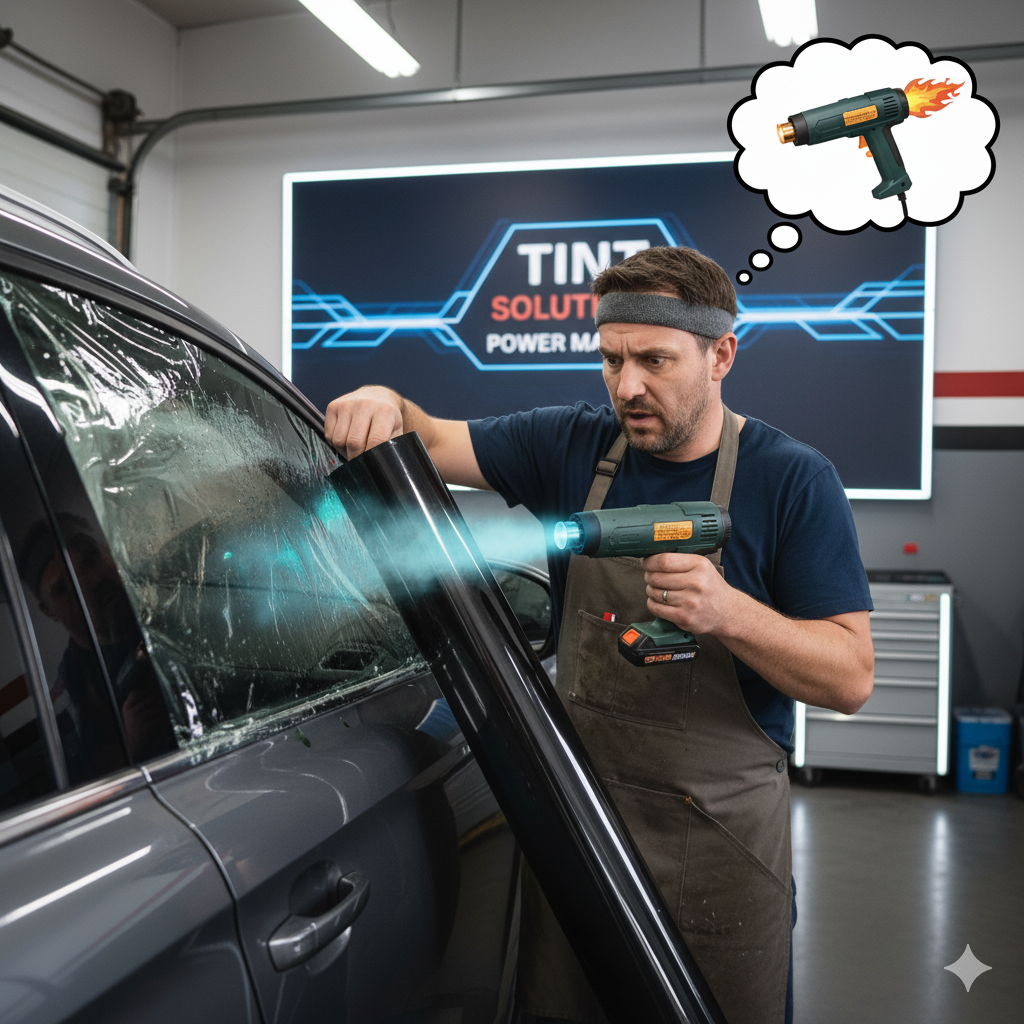
Why Cordless Heat Guns Don't Work for Window Tinters (And What You Should Look for Instead)
If you're a window tinter, you already know that having the right tools can make or break your work. From squeegees to blades, every piece of equipment matters when you're chasing clean installs and professional results. One tool that gets a lot of questions in the tinting world is the heat gun.
Many new installers wonder: Can I just use a cordless heat gun? The short answer is no—and here's why.
The Problem with Cordless Heat Guns
At first glance, cordless heat guns seem convenient. No cords dragging across the floor, no need to be near an outlet, and easy portability. But when it comes to tinting, convenience doesn't outweigh performance.
-
Battery Life Issues
Cordless heat guns drain batteries quickly—especially when you're shrinking film on a large rear windshield or working in higher-volume shops. Most models only last a few minutes of continuous use before the battery dies, forcing you to swap packs or recharge. That downtime can slow down a job and cost you money. -
Not Hot Enough
Tinting requires high, consistent heat—up to 1,100°F—to shrink film properly without burning it. Most cordless models simply don't reach the same temperature or maintain it long enough compared to corded professional-grade heat guns. This leads to uneven shrinking, bubbles, or creases—exactly what you want to avoid. -
Inconsistent Performance
As the battery drains, so does the heat output. That inconsistency makes it difficult to control the shrink and achieve a flawless finish.
What to Look for in a Heat Gun
Instead of going cordless, invest in a reliable, corded heat gun built for continuous use. Here's what you should look for:
-
High Wattage and Temperature Control
A heat gun with at least 1,500 watts will deliver the heat needed for shrinking film. Adjustable temperature settings give you more control depending on whether you're working with side glass or a rear windshield. The heat gun needs to reach 1,100°F to properly shrink film. -
Durability and Build Quality
Choose a brand that's known for professional use—cheap off-brand models burn out fast. A heat gun should handle daily use without failing on the job. -
Comfort and Ergonomics
Since you'll be holding it for long stretches, make sure it's lightweight, comfortable, and has a good grip. A stand is also a bonus for hands-free use. -
Consistency
The most important factor—consistent heat output. A professional heat gun will maintain the same temperature no matter how long you're working, ensuring smooth film shrinking every time.
Final Word
Cordless tools have their place, but in the world of window tinting, cordless heat guns just don't cut it. They lack the battery life, heat output, and consistency needed to achieve professional results. Instead, invest in a reliable, high-powered corded heat gun—you'll save yourself frustration and deliver flawless installs every time.
Mastering heat gun technique is just one part of becoming a skilled, confident window tinter. Knowing when to apply heat, how much, and at what angle for different glass shapes—that's something best learned hands-on with expert guidance. Our window tinting and PPF training courses cover heat shrinking technique in depth, alongside installation, pricing, and everything you need to launch or grow your tinting business.
Ready to Learn Window Tinting the Right Way?
The Tint Academy is North America's leading certification school for automotive window tinting and paint protection film (PPF), with courses hosted across Canada and the USA. You'll train in small groups with experienced instructors, get hands-on practice on real vehicles, and leave with a recognized certification—and the confidence to start working right away.

Share and get 15% off!
Simply share this product on one of the following social networks and you will unlock 15% off!