


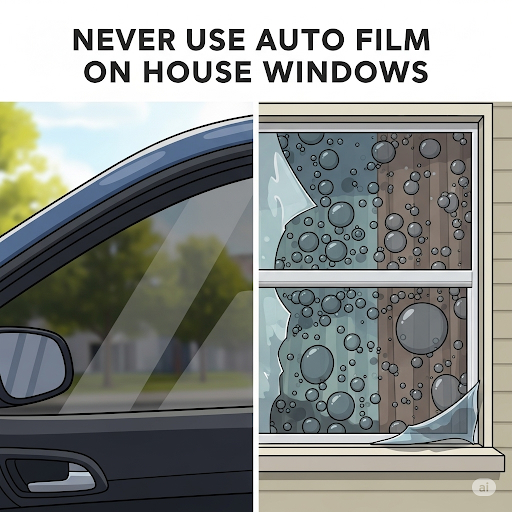
Why You Can’t Use Automotive Film on Residential or Commercial Windows
Window tinting has become one of the most effective ways to improve comfort, privacy, and energy efficiency. But when it comes to selecting the right window film, not all products are created equal. One of the most common mistakes homeowners and business owners make is thinking that automotive film can be used on residential or commercial windows. While both are technically “window tint,” the truth is they are designed for completely different applications.
Here’s why you should never use automotive film on residential or commercial glass:
1. Different Glass Types and Structures
Automotive glass is very different from the glass used in homes and commercial buildings. Cars typically have tempered glass on side windows and laminated glass on windshields. In contrast, homes and businesses may use annealed, tempered, laminated, double-pane, or low-E glass.
Automotive films are not engineered to handle the heat absorption and reflective needs of flat glass. Using the wrong film can trap too much heat inside the glass, leading to thermal stress cracks that damage the window.
2. Heat Absorption vs. Heat Rejection
Automotive films are designed to look good and reduce glare while withstanding the unique conditions of a vehicle interior. They typically absorb a lot of heat. This works fine in a car, where the glass is small and curved.
Residential and commercial windows, however, are much larger and often double-pane. If you install an automotive film, the heat absorption can become too intense, causing seal failure, fogging, or even cracked glass. Professional flat-glass films are made to reject heat outward, not absorb it.
3. UV and Energy Efficiency Differences
While automotive tint does block UV rays, residential and commercial window films are specifically designed for energy savings and climate control. These films reflect infrared heat, improve insulation, and can help reduce energy bills by up to 30%. Automotive films simply can’t offer the same performance benefits.
4. Warranty and Liability Issues
Using automotive film on a home or office window will void warranties—both on the film itself and on the glass. Manufacturers and installers are clear about this: each type of film is engineered for its specific environment. If you apply the wrong film, you won’t be covered for damages, and you could end up paying thousands to replace ruined windows.
5. Safety and Building Code Compliance
Commercial buildings especially must meet certain safety codes. Films for flat glass are tested to ensure compliance with fire safety standards, shatter resistance, and in some cases, security requirements. Automotive film doesn’t meet these certifications, meaning you could be out of compliance with local building codes if you install it.
Final Thoughts
While it might seem like “tint is tint,” the reality is that automotive film and flat-glass film are worlds apart in design and function. Installing the wrong film on your home or business could cause:
-
Damaged windows
-
Increased energy costs
-
Voided warranties
-
Potential code violations
If you’re looking to tint your home or office windows, always choose a professional-grade residential or commercial window film. These films are specifically engineered for energy efficiency, comfort, UV protection, and long-term durability—giving you peace of mind and maximum performance.

Share and get 15% off!
Simply share this product on one of the following social networks and you will unlock 15% off!