


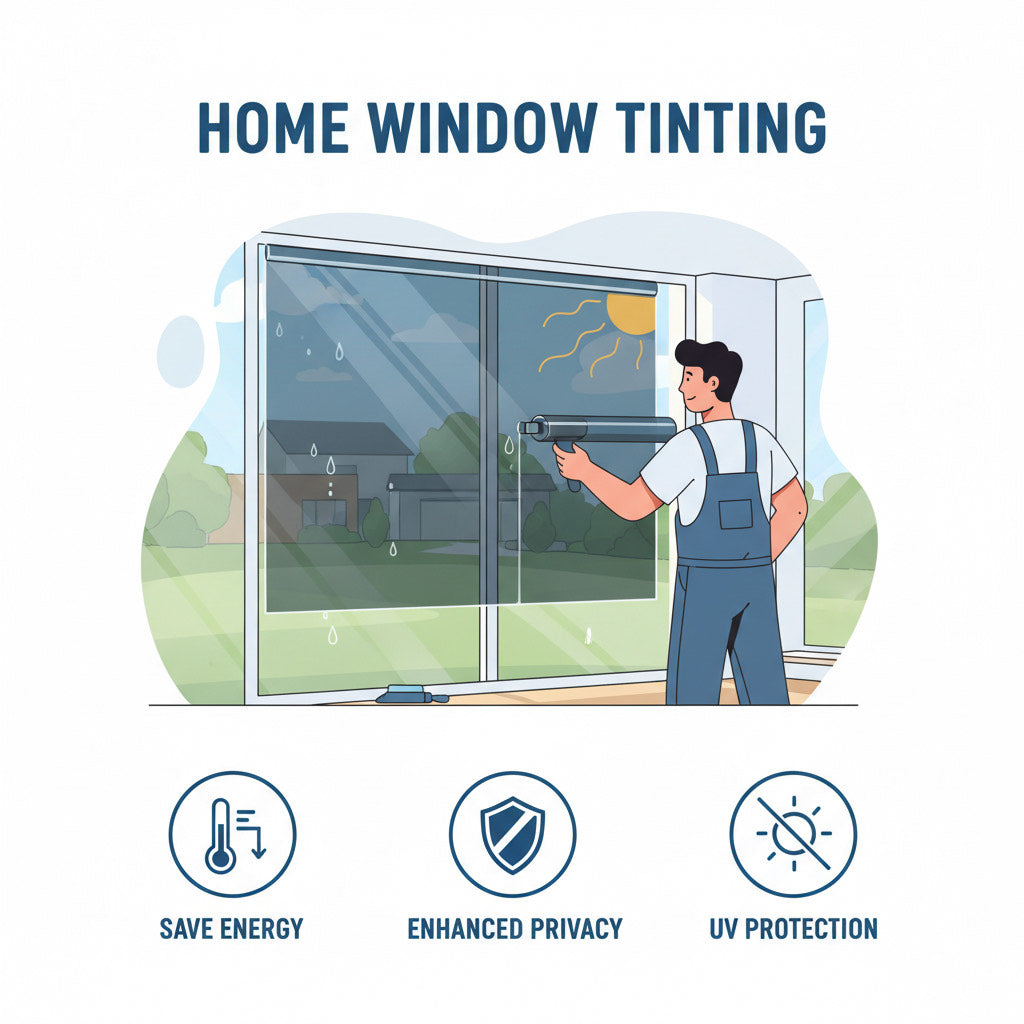
Many homeowners and business owners hear about window tinting and immediately think, “Why not use the same film that’s on cars?” While automotive window film is excellent for vehicles, using it on residential or commercial windows is a recipe for problems. Let’s break down why, explain the science behind it, and explore what kind of film you should actually use.
The Science Behind Window Film
Window films work by absorbing or reflecting solar energy to reduce heat and block UV rays. Automotive films are specifically designed for curved, small windows that move frequently and have different glass compositions than building windows.
Here’s why that matters:
-
Thermal Expansion Differences
-
Car windows are tempered and designed to handle rapid temperature changes. Automotive film is engineered to flex with the glass during heating and cooling cycles.
-
Building windows, especially residential or commercial ones, are usually larger and may be annealed or laminated glass, which behaves differently when exposed to heat. Automotive film doesn’t account for the larger surface area or slower heat dissipation, which can lead to bubbling, peeling, or cracking.
-
-
Adhesion Chemistry
-
Automotive films are formulated to stick to automotive glass coatings, which differ from home and office windows. Applying them to building glass often results in poor adhesion and reduced longevity.
-
-
UV and Heat Protection
-
Automotive films focus on protecting the car interior and passengers from UV rays and heat. They aren’t optimized for energy efficiency in buildings or reducing overall cooling costs.
-
-
Warranty and Safety Concerns
-
Using the wrong film on your home or office can void warranties and even cause damage to glass, especially if it’s tempered or treated for safety.
-
What Film Should You Use Instead
For residential and commercial windows, you should use architectural or building window films. These films are engineered for flat, stationary glass and provide several benefits:
-
Energy Efficiency: Designed to reduce heat gain, helping lower cooling costs.
-
UV Protection: Blocks up to 99% of harmful UV rays to protect furniture, flooring, and occupants.
-
Glare Reduction: Helps reduce glare from the sun without compromising visibility.
-
Durability: Built to withstand long-term exposure to sunlight and temperature fluctuations on larger glass surfaces.
-
Safety and Security Options: Some films can strengthen glass, holding it together in case of breakage.
Some popular types include:
-
Solar Control Films: Reduce heat and glare without darkening the glass too much.
-
Decorative Films: Add privacy or design elements while also providing UV protection.
-
Security Films: Reinforce glass to resist shattering from impacts or break-ins.
Bottom Line
While it might seem cost-effective to use automotive window film on a home or office, the science clearly shows why it’s a bad idea. The wrong film can lead to bubbling, peeling, reduced protection, and even potential glass damage. Investing in architectural-grade window film is the safest way to protect your property, enhance energy efficiency, and ensure your windows look and perform their best for years to come.

Share and get 15% off!
Simply share this product on one of the following social networks and you will unlock 15% off!