


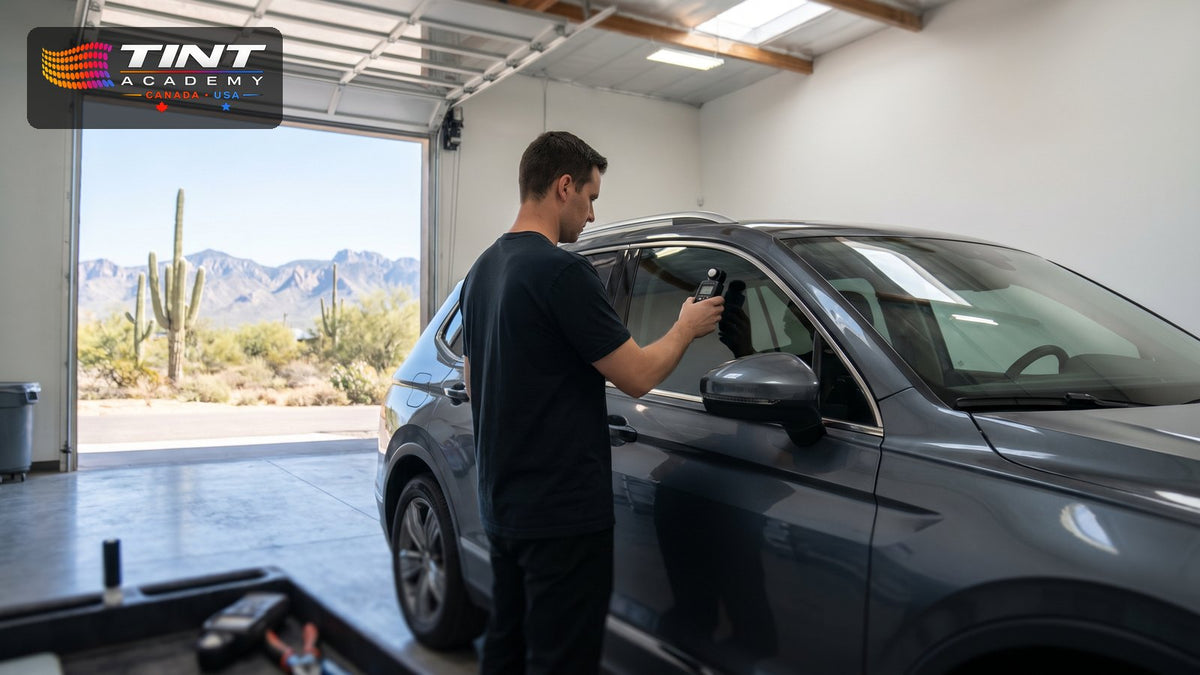
Arizona window tint law lets front side windows go down to 33% light transmission (plus or minus 3%), measured with the film and glass together, while the windows behind the driver have no darkness limit, only a reflectance limit. If you plan to tint cars in Phoenix, you need to know those numbers, the windshield rule and the disclosure the law puts on installers. This guide walks through A.R.S. 28-959.01 in plain English and finishes with Tint Academy’s next hands-on Phoenix / Mesa class: January 23–24, 2027 at The Bays Mesa, 2450 W Broadway Rd #113, Mesa, AZ.
Register: Phoenix / Mesa Jan 23–24
Tint Academy has trained 6,500+ students over 10 years. New to the Valley class? Start with learning window tinting in Mesa, Arizona, then come back here for the legal side of the job.
Arizona Window Tint Law at a Glance
Arizona’s rules sit in A.R.S. 28-959.01 (materials on windows or windshield). The general rule bans film that changes the color or lowers the light transmittance of a vehicle’s windows, then lists the exceptions tint shops work within:
- Front side windows and wing vents: film used with the glass must give a light transmission of 33% plus or minus 3% and a luminous reflectance of 35% plus or minus 3%.
- Side windows behind the driver and rear windows: luminous reflectance of 35% plus or minus 3% or less. The statute sets no light transmission figure for these windows.
- Rear window: exempt when the vehicle has outside mirrors on both the left and right sides that show the driver the highway at least 200 feet behind.
- Windshield: transparent material is allowed only on the topmost portion, with its bottom edge at least 29 inches above the undepressed driver’s seat (measured from a point 5 inches in front of the bottom of the backrest, seat rearmost and lowest, vehicle level), and it cannot be red or amber.
This is a plain-English summary for installers, not legal advice.
Light transmission includes the glass
The statute defines light transmission as the light that passes through the product including the glazing. Factory glass already blocks some light, so the number on a film box is not the number a meter reads on the car. A film that measures one figure on clear glass will read darker once it is on a factory window. Careful installers meter the glass before and after. Reflectance matters too: a mirror-like film can break the 35% reflectance limit even when its darkness is fine.
The Installer Disclosure Most New Tinters Miss
Subsection F of A.R.S. 28-959.01 puts a duty on the business, not just the driver. A person who sells or installs these materials must state in a conspicuous manner that installing them on the driver or passenger side window may be illegal in some states. Many shops print that statement on the work order or invoice.
It also helps to record the film, shade and any meter reading for each window, so you have a clear record of the job.
Medical Exemptions for Darker Tint
Subsection G lets the Arizona Department of Transportation issue an exemption for a person who must be shielded from direct sun for medical reasons, supported by a physician’s written attestation. The exemption can cover a vehicle the person owns or one they regularly ride in. ADOT’s window tinting exemption FAQ says the applicant submits a copy of the vehicle registration and a letter from their physician, and that the exemption does not include the front windshield. ADOT’s current form is the Application for Window Tint Medical Exemption (40-1511).
As an installer, ask to see the exemption before you install film darker than the general limits, and keep a copy with the job record.
Why Arizona Tint Work Is Mostly About Heat
Phoenix customers usually want a cooler car, not just a darker one. Because the front doors have a darkness limit, heat performance there comes from the film’s construction, not its shade, which is where ceramic film and an honest explanation of total solar energy rejected (TSER) help. Read why TSER is the real number to look at when choosing window film, and our desert-heat installer guide for tips on working with hot glass. Neighboring states write their rules differently, so compare our California window tint laws guide if you get customers from out of state.
Rear Windows: Where Arizona Installers Earn Their Reputation
Because the rear window is exempt from darkness limits when the vehicle has dual outside mirrors, many Arizona customers choose a darker shade in the back. That makes clean rear window shrinking a core skill. In this short from our YouTube channel, Tint Academy shows a rear windshield heat-shrink step: if fingers form at the sides, redirect the excess film using the H pattern.
For the full process, see our step-by-step guide on how to tint a back window.
Phoenix / Mesa Window Tint Course: January 23–24, 2027
The Phoenix / Mesa Window Tint Certification is a 2-day, hands-on automotive window tint course for beginners, detailers, automotive professionals and business owners. No previous tinting experience is required. It is convenient for students from Phoenix, Scottsdale, Tempe, Chandler and Gilbert.
- Dates: January 23–24, 2027 (the November 14–15, 2026 class is sold out)
- Time: 9:00 AM to 5:00 PM each day
- Venue: The Bays Mesa, 2450 W Broadway Rd #113, Mesa, AZ 85202
- Regular tuition: $1,299 USD
- Limited Early-Bird: $996 total for full pay (save $303), or a deposit plan of $350 today and $1,099 total, with the balance due at class. Early-Bird availability is limited, so contact the team before paying.
What you practice
Students work on real vehicles and real automotive glass with professional film, heat guns, squeegees and tint knives. Day 1 covers film fundamentals, glass preparation, roll-down, quarter and frameless windows, tint removal and sun strips. Day 2 adds heat shrinking, sedan and hatchback rear windows, trucks and SUVs, a plotter overview, troubleshooting, and pricing, marketing and booking customers.
What is included
You keep a professional tint tool kit and ceramic automotive window film. You also get Tint Academy Window Tint Certification, the free online course (50+ chapters), business, pricing and marketing training, supplier access, lifetime mentor support and future re-attendance where available. Learn what the certificate covers on our window tint certification page.
Want to add paint protection film too? A PPF course is scheduled at the same venue on January 25–26, 2027. See the PPF training page and ask the team for details.
How to register
Text the team your full name, email, “Phoenix / Mesa Jan 23–24”, and whether you want Full Pay or the Deposit Plan. Ask them to check current Early-Bird availability, and they will send the correct secure registration invoice.
Call or text: 321-364-9518 (USA)
Register: Phoenix / Mesa Jan 23–24
Frequently Asked Questions
What is the legal tint limit in Arizona?
Under A.R.S. 28-959.01, film on the front side windows must work with the glass to give a light transmission of 33% plus or minus 3% and a luminous reflectance of 35% plus or minus 3%. Side windows behind the driver and the rear window have a reflectance limit of 35% plus or minus 3% or less, and the rear window is exempt when the vehicle has outside mirrors on both sides. This is general information, not legal advice.
Can you tint a windshield in Arizona?
Only the topmost portion. The statute allows transparent material at the top of the windshield if its bottom edge is at least 29 inches above the undepressed driver's seat, measured as the law describes, and the material is not red or amber.
Does Arizona have a medical exemption for darker tint?
Yes. ADOT can issue an exemption for a person who must be shielded from direct sun for medical reasons, supported by a physician. ADOT says you submit a copy of the vehicle registration and a letter from your physician, and the exemption does not include the front windshield.
Do window tint installers in Arizona have to tell customers anything?
A.R.S. 28-959.01(F) says a person who sells or installs these materials must state in a conspicuous manner that installing them on the driver or passenger side window may be illegal in some states. Many shops put this on the work order or invoice.
When and where is the next Phoenix window tint course?
January 23–24, 2027, 9:00 AM to 5:00 PM each day, at The Bays Mesa, 2450 W Broadway Rd #113, Mesa, AZ 85202. The November 14–15, 2026 class is sold out.
How much is the Phoenix / Mesa window tint course?
Regular tuition is $1,299 USD. Limited Early-Bird pricing is $996 total for full pay, or a deposit plan of $350 today and $1,099 total with the balance due at class. Text or call 321-364-9518 to check Early-Bird availability before you pay.
Register: Phoenix / Mesa Jan 23–24
This article is general information, not legal advice. Arizona tint rules can change; confirm current requirements in A.R.S. 28-959.01 and with ADOT.

Share and get 15% off!
Simply share this product on one of the following social networks and you will unlock 15% off!