


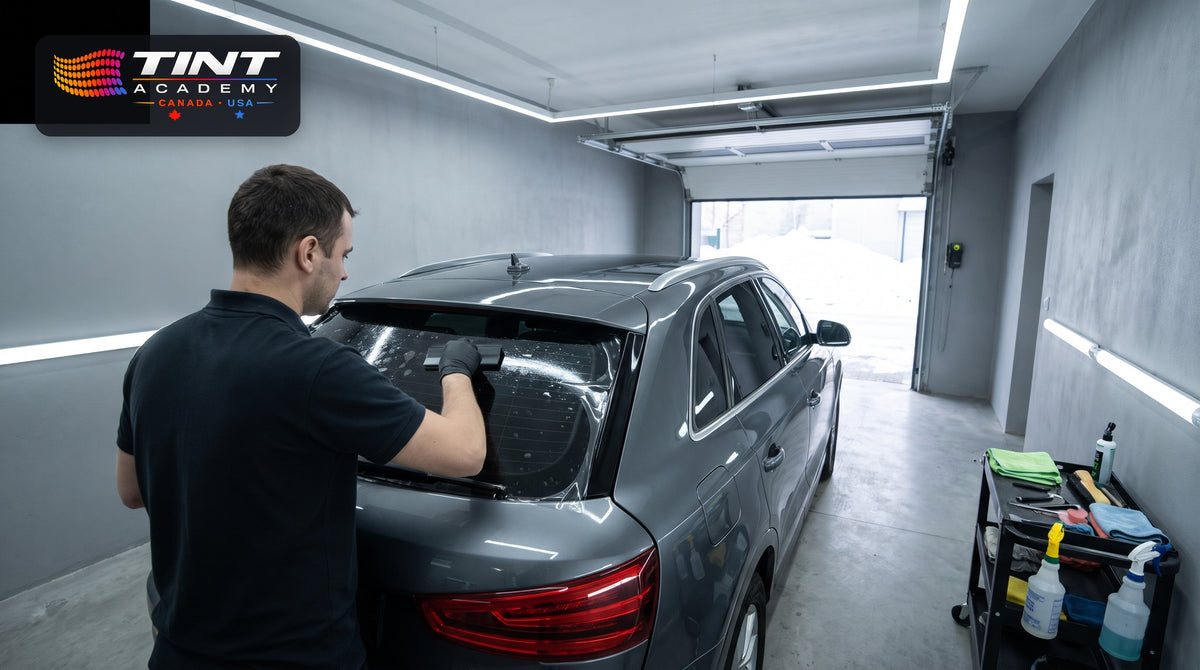
Is window tint legal in Nova Scotia? Only partly. Under the province’s Standards of Vehicle Equipment Regulations, you can’t add a darkening coating or film to the windshield or to the windows directly beside the driver, with exceptions for factory-tinted glass and clear, untinted frost shields. The regulation doesn’t mention the rear side windows or the rear window. If you want to learn to tint legally and professionally, Tint Academy’s next Halifax class is November 14–15, 2026.
This post is general information, not legal advice. Regulations get amended, so check the current rules or ask the province before you tint a vehicle.
What Nova Scotia’s Window Tint Regulation Says
The rule sits in section 3 of the Standards of Vehicle Equipment Regulations (N.S. Reg. 51/85), made under the Motor Vehicle Act. The Province of Nova Scotia labels that web version an unofficial consolidation, so treat it as a reference and confirm against the official regulation. In plain language, the text says:
- Nobody may operate a vehicle on a highway if the windshield, or a window directly to the right or left of the driver’s seat, has been sprayed, coated or covered with a substance that reduces or is meant to reduce the light passing through it.
- That applies to all or any part of the windshield or those windows.
- It does not apply to a vehicle with a windshield or window that was tinted during the manufacture of the glass.
- It does not prohibit clear, untinted frost shields.
- Separately, the glass in the windshield or any window can’t be damaged or discoloured to an extent that impairs the driver’s vision.
Notice what is missing: there is no visible light transmission percentage. Some provinces and states publish a number such as 30% or 35%. Nova Scotia’s text restricts the front glass without offering a legal darkness level, and we didn’t find a tint exemption process in the regulation itself. Our province-by-province guide to window tint laws in Canada compares how the rules differ across the country.
What About Rear Windows and Rear Side Windows?
The regulation text we reviewed only restricts the windshield and the windows directly to the driver’s right or left. It says nothing specific about rear side windows or the rear window, so it doesn’t give a rule either way for that glass. If you have a specific vehicle or situation in mind, ask the province or a lawyer rather than relying on a blog post.
Rear glass is also one of the hardest parts of the job for beginners. Curved back windows have to be heat shrunk so the film lies flat, and that takes practice. Here is a short from the Tint Academy channel on one prep step that protects the defroster lines.
Video summary: In this 41-second short, Tint Academy shows the inside prep for a rear window tint job and why you shouldn’t break the heat lines.
Want more? Read our guide to 7 heat shrinking mistakes beginners make.
Halifax Window Tint Class: November 14–15, 2026
Knowing the law is one thing. Knowing how to install film cleanly is the other. Tint Academy Canada’s Halifax Window Tint Certification is a 2-day, hands-on class built for beginners, detailers, automotive professionals and aspiring business owners.
- Dates: Saturday, November 14 and Sunday, November 15, 2026
- Hours: 9:00 AM to 5:00 PM each day
- Location: RAD Detail, 1109 St Margarets Bay Road, Unit 1, Beechville (Halifax area), NS.
- Format: 2 full days of training on real vehicles with an instructor
- Experience needed: none
- Tuition: $1,299 CAD, plus applicable taxes
Reserve Your Seat: Halifax, November 14–15
What You’ll Learn
Day 1: Foundations and side windows
- Tint theory, professional tools and film
- Glass preparation and contamination control
- Roll-down windows, framed 2-stage installs, quarter windows and frameless windows
- Tint removal, sun strips and windshield banners
- Working with customers, plus marketing and business fundamentals
Day 2: Rear windows and complete vehicles
- Review and extra hands-on practice
- Heat shrinking, rear-window preparation, and sedan and hatchback rear windows
- Rear-window tint removal
- Trucks and SUVs, and troubleshooting installation problems
- Plotter overview, pricing and quoting, and booking customers
Wet application also matters. The slip solution you use affects how easily the film moves and how clean the finish is, and our video on it is a good primer before class.
Video summary: In this 4-minute-52-second video, Tint Academy explains how much baby shampoo to use in window tint slip solution, and what can go wrong with too much or too little.
Price and What’s Included
Regular tuition is $1,299 CAD plus applicable taxes. A limited number of Early-Bird seats are offered at $1,097 CAD full pay (a $202 saving). To ask about one, call or text 289-201-2070 before you register. If you would rather hold your seat first, a $350 deposit reserves it and the remaining balance is due at class.
Every registration includes:
- A professional Tint Tool Kit and a 100 ft. roll of ceramic automotive window film, both yours to keep
- Tint Academy certification and the online window tint training course
- Business, pricing and marketing guidance
- Supplier access, lifetime mentor support and the student community
- Free future observation or re-attendance opportunities for extra practice
Tint Academy has trained 6,500+ students over 10 years. We don’t guarantee income or employment, and professional tinting takes continued practice after class. Our certificate shows you completed our training. It is not a government licence. For a wider look at pricing, see How Much Does Window Tint Training Cost? and our Halifax class overview.
How to Register
- Open the Halifax course page and choose the November 14th & 15th option.
- Pick full pay or the $350 deposit plan.
- Want the Early-Bird price? Call or text 289-201-2070 first and mention the Halifax Nov 14–15 class.
Book the Halifax Window Tint Class
Prefer another city? See every scheduled class on our Training and Certification page.
Nova Scotia Window Tint FAQ
Is window tint legal in Nova Scotia?
Partly. Nova Scotia's Standards of Vehicle Equipment Regulations prohibit adding a coating or covering that reduces light transmission on the windshield or on the windows directly to the right or left of the driver's seat. Factory-tinted glass and clear, untinted frost shields are listed as exceptions. The regulation does not mention rear side windows or the rear window. Check current rules before you tint, because regulations can be amended.
Can I tint my front side windows in Nova Scotia?
Not with an aftermarket film. The regulation covers all or any part of the windows directly to the right or left of the driver's seat, and it does not set a percentage that would make some darkness acceptable. Glass that was tinted during manufacture is treated differently.
What about the rear windows?
The regulation text we reviewed only restricts the windshield and the windows directly beside the driver. It does not set a rule for rear side windows or the rear window. Rear-window heat shrinking is one of the skills we teach on Day 2 of the Halifax class.
When is the next Halifax window tint class?
Tint Academy's next Halifax class is Saturday and Sunday, November 14–15, 2026, from 9:00 AM to 5:00 PM each day, according to the Halifax course page on tintacademy.store.
How much does the Halifax window tint course cost?
Regular tuition is $1,299 CAD, plus applicable taxes. A limited number of Early-Bird seats are offered at $1,097 CAD full pay. Call or text the team before you register to ask whether one is available. You can also reserve a seat with a $350 deposit, with the remaining balance due at class.
Do I need experience to take the class?
No. The Halifax course welcomes complete beginners as well as detailers and shop owners. You practise hands-on with an instructor, and every student leaves with a tool kit and a 100 ft. roll of ceramic automotive window film.

Share and get 15% off!
Simply share this product on one of the following social networks and you will unlock 15% off!