


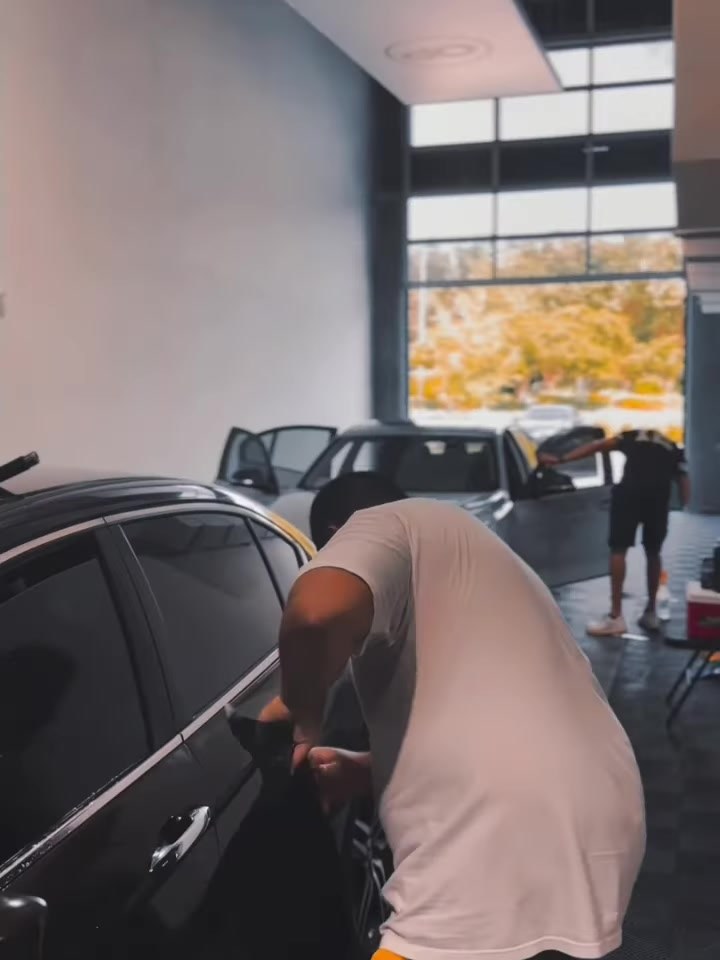
Short answer: rear windows are the hardest part of a car to tint because the glass is curved and the film is flat, so the film has to be heat shrunk to fit before it goes on. In Florida, where cars often roll in hot from the sun, you also have to control your workspace. Tint Academy's next 2-day hands-on window tint course in Orlando is December 12–13, 2026 at Owner's Pride Auto Spa, and Day 2 is built around sedan and hatchback rear windows, trucks and SUVs.
Register for the Orlando Dec 12–13 class
- Dates: Saturday–Sunday, December 12–13, 2026, 9:00 AM – 5:00 PM each day
- Venue: Owner's Pride Auto Spa Orlando, 8340 Southpark Cir #140, Orlando, FL 32819
- Tuition: $1,299 regular, or a $350 deposit ($1,099 total, $749 due at class)
- Included: professional tint tool kit, 100 ft roll of ceramic automotive window film, Tint Academy certification and online course access
- Experience needed: none
Every Orlando date is listed on the Orlando window tint course page.
Why rear windows are the window most beginners struggle with
Side windows are close to flat. The back glass on most sedans, hatchbacks and SUVs curves side to side and top to bottom. Gila's rear window instructions note that rear windows are often curved side to side and top to bottom, and that flat film can't simply conform to those compound curves.
That help is heat shrinking. According to the IWFA automotive installation guidelines, window film is stretched slightly in the machine direction during manufacturing and keeps a "memory" of its original shape. When you apply heat, that tension releases and the film shrinks to the shape of the glass. The guidelines call single-piece heat shrinking the current industry standard.
The catch is that film only shrinks one way. The IWFA notes that only fingers running across the machine direction can be shrunk, so installers usually lay the film with the factory edge running horizontally across the back glass and do all the shrinking along the top and bottom edges. Get the orientation wrong and heat won't fix it.
What you practice on rear windows in the Orlando class
The Orlando course is 2 full days, and about 80% of the time is hands-on practice with an instructor beside you. Day 1 builds the foundation on side windows: tint theory, installation drills, framed and frameless roll-down windows, 2-stage installs, quarter windows, tint removal and sun strips. Day 2 moves to the back of the car:
- Review and more practice on roll-down and quarter windows
- Hatchback rear window preparation and installation
- Sedan rear window preparation and installation
- Rear window tint removal
- Trucks and SUVs
- Plotter overview and an introduction to residential window film
- Marketing, pricing and booking customers
Across both days you also practice glass prep, hand cutting, heat shrinking, bottom-loading, contamination prevention and edge finishing. For more detail, see what a 2-day window tint training class covers.

The rear window process, step by step
1. Prep the outside and the inside
The film is shaped on the outside of the glass and installed on the inside, so both sides need to be clean.
2. Lay out and anchor the film
The film goes on the outside with the liner facing you and the factory edge running horizontally. Installers then anchor it, commonly in an H pattern, so the excess is pushed into fingers along the top and bottom edges where it can be shrunk.
3. Heat shrink with control
Work one small area at a time, keep the heat gun moving and lay each finger down before moving on. Splitting a large finger into smaller ones makes it easier to shrink without creasing. Too much heat in one spot can damage the film, which is why this step gets so much supervised practice in class.
4. Trim, transfer and install
Once the film lies flat across the whole window, it's trimmed to the glass, then the liner comes off as the adhesive is wetted and the film is moved inside, positioned and squeegeed out. Our guide to the reverse roll window tint method shows one way to handle the transfer.
Working in Florida heat: controlling the bay
Florida customers ask for tint for heat, glare, UV, privacy and looks. Working conditions matter as much as technique. Gila's rear window installation guidelines say to apply film in a shaded, well-lit, dust-free environment and below 100°F. In practice that means:
- Bring the car inside. A vehicle that has been parked in direct sun has hot glass. Let it sit in the shade of the bay before you start.
- Keep dust and wind out. A closed, clean bay keeps debris off the adhesive, so mobile tinters still need a covered space for back glass.
If you're weighing which film to sell for Florida heat, our post on ceramic tint for Florida heat compares dyed, carbon and ceramic options.
Florida's rear window tint limits
Knowing the law is part of quoting the back glass. Under Florida Statute 316.2954, film on windows behind the driver must transmit at least 15% of visible light, or at least 6% on multipurpose passenger vehicles, and reflectance can't exceed 35%. Front side windows have separate limits, so check the vehicle type before recommending a shade.

Watch: how to heat shrink a rear windshield
In this Tint Academy tutorial, we show how to heat shrink a rear window step by step, why curved glass and flat film make shrinking necessary, and how to use the heat gun to avoid fingers and creases.
Who the Orlando class is for
The course suits complete beginners, detailers adding tint, PPF and wrap installers, and automotive business owners. Planning a career change? Read how to become a window tinter in Orlando. Setting up a company? Our guide to starting a window tint business in Orlando covers Florida setup, and the window tint business and cost guides go deeper on pricing and costs.
After class you keep your tools and film, with online training, supplier access, lifetime mentor support and chances to return to eligible future classes. Tint Academy has trained 7,500+ students over 10 years; see the window tint certification course overview for every city. Actual earnings depend on your skill, pricing, location and how much work you book, and Tint Academy does not guarantee income or employment.
Frequently asked questions
Does the Orlando window tint course cover rear windows?
Yes. Day 2 of the Orlando class covers sedan and hatchback rear window preparation and installation, rear window tint removal, and trucks and SUVs. Heat shrinking is part of the skills practiced across both days.
Why does rear window tint need to be heat shrunk?
Most rear windows are curved, often in two directions, while window film comes off the roll flat. Heat shrinking forms the film to the shape of the glass before it is installed on the inside, so it lies flat without fingers or creases at the edges.
Is it harder to tint a rear window in Florida heat?
It can be if conditions aren't controlled. Manufacturer guidance such as Gila's rear window instructions says to apply film in a shaded, well-lit, dust-free area and below 100°F. That's why the class works indoors, inside a shop.
What is the darkest legal rear window tint in Florida?
Under Florida Statute 316.2954, film on windows behind the driver must let in at least 15% of visible light, or at least 6% on multipurpose passenger vehicles, with reflectance of no more than 35%.
How much is the Orlando window tint course?
Regular tuition is $1,299 for the December 12–13, 2026 class. You can also reserve with a $350 deposit ($1,099 total, with $749 due at class). A limited number of Early-Bird seats are available at $996 full pay if you contact the registration team before paying: call or text 321-364-9518.
Do I need experience to learn rear window tinting in Orlando?
No. The course teaches the process from the beginning, and you do not need previous window tinting experience. You keep your tool kit and 100 ft roll of ceramic film to keep practicing rear windows after class.
Reserve your seat in Orlando
The next Orlando window tint course runs December 12–13, 2026 at Owner's Pride Auto Spa, 8340 Southpark Cir #140. Seats are limited. To check Early-Bird availability before you pay, call or text the registration team and mention the Orlando Dec 12–13 class.
Call or text: 321-364-9518 (USA)
Register for Orlando – December 12–13, 2026
More on Orlando: Orlando window tint course · Orlando window tinter career guide
