


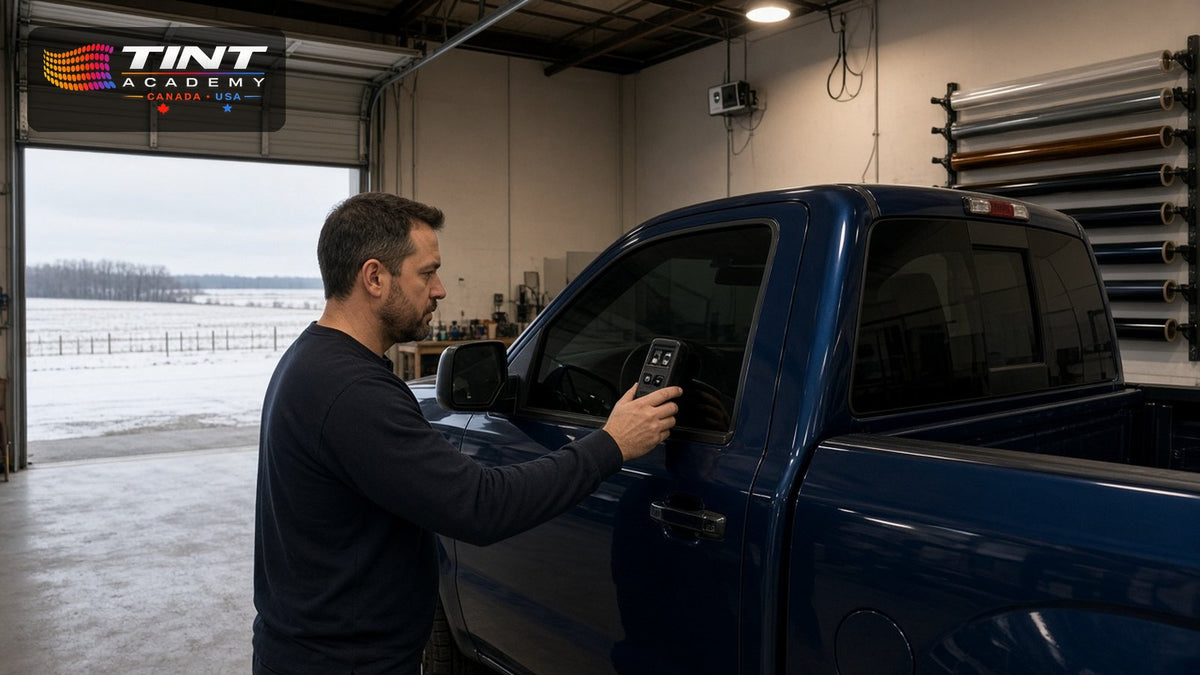
Indiana window tint law (Indiana Code § 9-19-19-4) bans tint with less than 30% visible light transmittance or more than 25% reflectance on the windshield, side wings, front door windows and rear back window, limits windshield tint to the area above the AS-1 line, and makes it unlawful for an installer to apply film that puts a car out of compliance. This guide explains the rules in plain English for new and working tinters, then covers Tint Academy’s next hands-on Indiana class on January 16–17, 2027 at Scorpion Films Headquarters in Cloverdale.
Register: Indiana Jan 16–17 Window Tint Class
Tint Academy has trained 6,500+ students over 10 years. See what the certificate means on our window tint certification page, or read what a 2-day window tint training class covers.
Indiana Window Tint Law at a Glance
Indiana’s tint rules are in Indiana Code § 9-19-19-4 (tinting, glazing or sunscreening vehicle windows). The main points:
- Covered glass: the windshield, side wings, side windows that are part of a front door, and the rear back window.
- Light transmittance: tint or sunscreening material on that glass may not have light transmittance below 30% in the visible range.
- Reflectance: total solar reflectance of visible light may not be more than 25%, measured on the nonfilm side.
- Windshield: any treatment may go only on the uppermost part of the windshield and no further down than the AS-1 line.
- Factory glass: the section does not apply to manufacturer tinting or glazing that complies with federal standard FMVSS 205, but proof of that compliance from the manufacturer, supplier or installer must be carried in the vehicle.
This is a plain-English summary for installers, not legal advice. The section was last amended in 2018, so always check the current text before you take paid work.
What about the rear passenger windows?
Subsection (c) does not list the side windows behind the front doors. That does not mean anything goes. Indiana Code § 9-19-19-3 separately says a person may not drive with sunscreening or other nontransparent material on the windshield, side wings, or side or rear windows that obstructs the driver’s clear view of the highway or an intersecting highway. When a customer asks for very dark film on the back doors, talk through visibility, especially for night driving, before you cut.
What Indiana Law Asks of the Installer
Many states only regulate the driver. Indiana also speaks directly to the person doing the work.
You can’t install a non-compliant tint job
Subsection (e) says a person may not tint or otherwise cover or treat the covered windows so that driving the vehicle afterwards would violate the 30% transmittance, 25% reflectance or AS-1 windshield rules. That applies to shop owners, mobile tinters and detailers who add tint as a side service.
The medical statement exception
Subsection (b) says the section does not apply to the driver of a vehicle owned by someone who must be shielded from direct sunlight for medical reasons, or a vehicle in which such a person is a habitual passenger. The medical reasons must be attested to by a physician or optometrist licensed in Indiana, the certification must be carried in the vehicle, and it must be renewed every year.
Subsection (e) then protects the installer: it is not a violation if the work is done for a person who gives the installer that physician’s or optometrist’s statement. A sensible shop habit is to see the statement before you install darker film, keep a copy with the job record, and note the date so the customer knows it needs annual renewal.
Traffic stops
Under subsection (f), a vehicle may be stopped to check compliance with the tint section, but the vehicle, its contents, the driver or passengers may not be inspected, searched or detained solely because of a tint violation.
Metering: Why the Box Shade Isn’t the Final Number
Indiana’s 30% limit is about light transmittance through the treated window, and factory glass already blocks some light. A film labelled with one shade can read darker once it is on the glass. Meter the bare glass first, meter again after install, and keep both readings with the invoice. Reflectance matters too: Indiana caps it at 25%, so be careful with mirrored or highly reflective films on the front doors and rear window.
If a customer wants more heat rejection without going darker, explain why TSER is the real number to look at when choosing window film. Other states write their rules very differently; compare our guides to Tennessee window tint law for installers and Arizona window tint law.
The Rear Window Still Takes the Most Practice
Whatever shade a customer picks, the rear back window is where new tinters are tested. In this Tint Academy short, the rear windshield heat-shrink starts by breaking the window into four sections.
For the full process, read our step-by-step guide on how to tint a back window, and build muscle memory with these beginner window tinting drills.
Indiana Window Tint Course: January 16–17, 2027
Tint Academy’s Indiana Window Tint Certification is a 2-day, hands-on automotive window tint course at Scorpion Films Headquarters. It is built for people starting from zero, detailers adding a service, PPF installers adding tint, and anyone planning a side hustle or full-time automotive service business. No previous tinting experience is required, and classes are kept small so students spend more time working with instructors than watching.
- Dates: January 16–17, 2027
- Time: 9:00 AM to 5:00 PM each day
- Venue: Scorpion Films Headquarters, 6184 S US Hwy 231, Cloverdale, Indiana
- Regular tuition: $1,299
- Limited Early-Bird: $996 full pay (save $303), or a $350 deposit today with $1,099 total and $749 remaining at class. Early-Bird availability is limited, so contact the team before paying.
What you practice
Day 1 covers tint theory and fundamentals, working with customers, installation drills, framed and frameless roll-down windows including 2-stage installs, quarter windows, tint removal, sun strips and banners, and marketing basics. Day 2 adds review and more hands-on practice, hatchback and sedan rear windows, rear window tint removal, trucks and SUVs, a plotter overview, and pricing and booking customers.
What is included
You keep a professional tint tool kit and a 100 ft. roll of ceramic automotive window film, so you can keep practicing right after class. Registration also includes Tint Academy Certification, the online window tint training course, business and pricing training, marketing and customer acquisition guidance, supplier access, lifetime mentor support, a student support community, and free future observation or re-attendance opportunities for more practice.
A PPF certification class runs at the same venue on January 18–19, 2027; contact the team for current PPF availability and pricing, or learn more on our PPF training page. For venue and schedule details, see our window tint class in Indiana at Scorpion Films HQ guide.
How to register
Call or text the registration team with your name, mention the Indiana January 16–17 window tint class, and ask them to check discounted seat availability. If an Early-Bird seat is open, the team will confirm it and send the correct payment link. You can also register directly on the Indiana window tint course page.
Call or text: 321-364-9518 (USA)
Register: Indiana Jan 16–17 Window Tint Class
Frequently Asked Questions
What is the legal tint limit in Indiana?
Under Indiana Code § 9-19-19-4(c), the windshield, side wings, front door side windows and rear back window may not have tint material with visible light transmittance below 30% or total solar reflectance of visible light above 25%, measured on the nonfilm side. This is general information, not legal advice.
Can you tint the windshield in Indiana?
Only the uppermost part. Subsection (d) says any windshield treatment may be applied only to the uppermost part of the windshield and may extend no further than the AS-1 line.
Does Indiana set a percentage for rear passenger side windows?
Subsection (c) does not list the side windows behind the front doors. However, Indiana Code § 9-19-19-3 still bars driving with sunscreening material on the side or rear windows that obstructs the driver's clear view of the highway or an intersecting highway.
Can an Indiana tint shop install darker film for a medical reason?
Yes, in limited cases. Subsection (e) says it is not a violation when the work is done for a person who gives the installer a statement from a physician or optometrist licensed in Indiana. That certification must be carried in the vehicle and renewed every year.
Is it illegal for an installer to put on illegal tint in Indiana?
Yes. Subsection (e) says a person may not tint or treat a covered window so that driving the vehicle afterwards would violate the 30% light transmittance, 25% reflectance or windshield AS-1 rules, unless the customer has given the installer a qualifying medical statement.
When is the next Indiana window tint course?
January 16–17, 2027, 9:00 AM to 5:00 PM each day, at Scorpion Films Headquarters, 6184 S US Hwy 231, Cloverdale, Indiana. Regular tuition is $1,299.
Register: Indiana Jan 16–17 Window Tint Class
This article is general information, not legal advice. Indiana tint rules can change; confirm current requirements in Indiana Code §§ 9-19-19-3 and 9-19-19-4.

Share and get 15% off!
Simply share this product on one of the following social networks and you will unlock 15% off!